Precision Architectural Door & Window Solutions for Japan
Curated exterior building opening systems engineered to satisfy strict Japanese climate profiles—from typhoon-induced wind loads in Kyushu to sub-zero thermal envelope standards in Hokkaido and Tohoku.
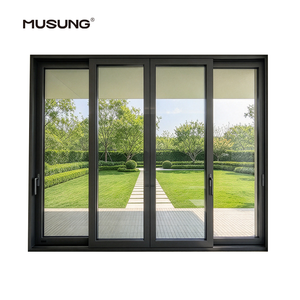
Large Sliding Glass Doors for Patio Aluminum Frame Thermal Insulation Double Glass Sliding Doors
Specifications & CAD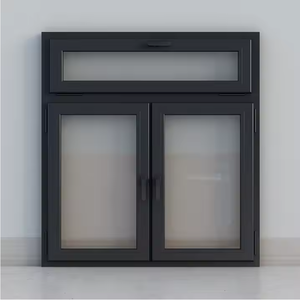
Beigeman Custom Cheap Casement Windows Aluminum Window Tempered Glass Casement Windows
Specifications & CAD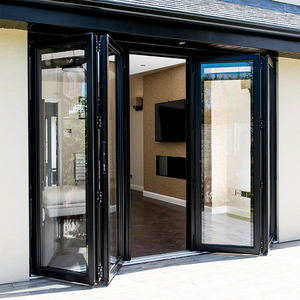
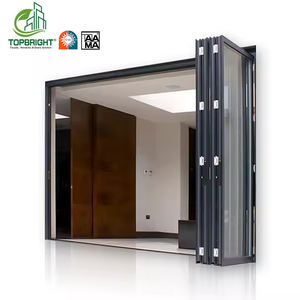
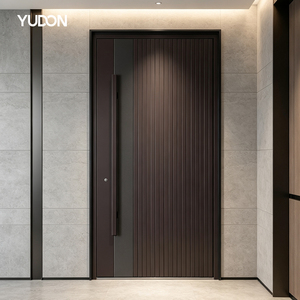
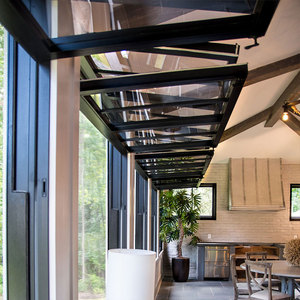
EOKO Home Vertical Folding Window Aluminium Tempered Glass Bifold Windows
Specifications & CAD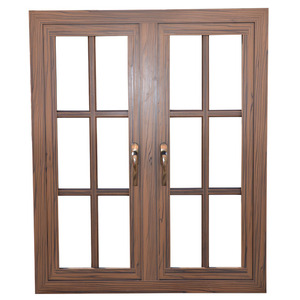
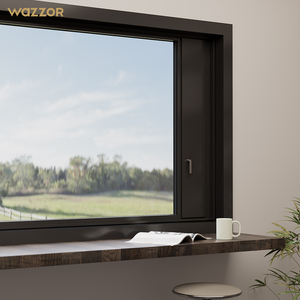
Wood Grain Finish Aluminum French Casement Window/double Glazed Casement Window
Specifications & CADOvercoming Strict Technical Hurdles in the Japanese Architectural Market
Procuring exterior aluminum architectural systems for the Japanese market is fundamentally different from Western and Southeast Asian sourcing. The stringent requirements mandated by the Building Standards Act of Japan (Kenchi-ku Kijun-hō) demand unparalleled air-tightness, water-tightness, seismic deflection tolerances, and precise thermal envelope performance.
JIS A 4702 & JIS A 4706 Compliance
Exterior doors entering Japanese high-rises or luxury residences must satisfy rigorous rating grades: A-4 Airtightness (air infiltration under 2 m³/h·m² at 100 Pa pressure difference) and W-5 Watertightness resisting up to 500 Pa pulsating wind-driven pressure without inward sill overflow.
Thermal Break & ZEH Standards
With the accelerated adoption of Japan's Net Zero Energy House (ZEH) and updated thermal insulation standards (H-6 / H-7 grades), multi-cavity PA66 polyamide insulating strips combined with Low-E argon insulating glass units achieve exceptional overall U-values below 1.5 W/m²·K.
Seismic In-Plane Deformation (D-Grade)
Japan's frequent seismic events demand in-plane displacement absorption (Grade D-3, 1/150 to 1/100 interlayer drift). Frame corner joints use reinforced extruded brackets with structural dual-component polyurethane inject-bonding to prevent structural jamming during seismic shocks.
Engineering Standards: Japanese Domestic vs. DERCHI Direct OEM Export
Direct performance data comparison demonstrating technical parity and competitive advantages in architectural projects across Japan.
| Performance Dimension | Japanese Domestic Standard (Typical Tier-1 Brands) | DERCHI High-Precision Export Specification | Architectural Benefit |
|---|---|---|---|
| Alloy Metallurgy & Profile Wall | A6063S-T5 (Average wall 1.4mm - 1.8mm) | A6063-T6 / Heavy-Duty 6061 Virgin Billet (2.0mm - 3.0mm structural core) | Significantly superior torsional resistance for oversized sliding and pivot entry doors. |
| Wind Pressure Resistance | S-5 to S-6 Grade (up to 2800 Pa) | Exceeds AS 2047 N6 & JIS S-7 Grade (tested past 3600–4500 Pa) | Impervious to super-typhoon impact in Okinawa, Kagoshima, and Pacific coastal areas. |
| Sealing Compound | Santoprene / Neoprene gaskets | Co-extruded Automotive-grade continuous EPDM + silicone foaming core | Maintains elasticity down to -35°C without curing, cracking, or acoustic leaking over 25 years. |
| Surface Finish & Weatherability | Anodized composite coating (JIS H 8602 Class A1) | Qualicoat certified AkzoNobel powder coating or 3-coat PVDF fluorocarbon | Withstands salt-spray mist corrosion exceeding 3,000 hours; ideal for coastal ports like Yokohama and Kobe. |
| Hardware Integration | Proprietary closed-loop Japanese hardware systems | CMECH / Siegenia / Hoppe & Miwa / GOAL locking adaptation options | Full integration with Japanese smart-home security and master key mortise designs. |
Engineered for Japan's Specific Architectural Scenarios
Custom exterior aluminum door solutions meticulously matched to varied urban, rural, and climatic challenges across the Japanese archipelago.
Urban Narrow-Lot Houses (Kyosho Jutaku)
In central Tokyo, Osaka, and Nagoya, urban single-family detached homes require precision space utilization and acoustic isolation. Ultra-slim thermal-break patio sliding doors and vertical bi-folds allow maximum natural daylight to flood narrow living quarters while delivering 35 dB sound transmission loss (STC) against street noise.
Primary Region: Tokyo Metropolitan, Osaka PrefectureCold-Climate Resorts & Mountain Villas
Chalet residences and boutique onsen resorts in Niseko, Hakuba, and Karuizawa require extreme thermal shielding to mitigate severe internal condensation and freezing snow accumulation. Multi-chamber thermal profiles with warm-edge spacers prevent perimeter draft leaks and glass fogging under 30°C interior-exterior delta.
Primary Region: Hokkaido, Nagano, NiigataModernized Sukiya & Sukiya-Zukuri Luxury Villas
Luxury contemporary ryokans and private country estates combine classical Japanese wooden aesthetics with modern high-performance materials. DERCHI provides high-definition fluorocarbon 3D heat-transfer wood-grain finishes that reproduce Hinoki (cypress) and Keyaki (zelkova) textures with zero termite risk or moisture expansion.
Primary Region: Kyoto, Shizuoka (Izu), NaraEmerging Market Trends in Japanese Architectural Fenestration
Understanding shifting regulatory baselines, environmental mandates, and demographic evolutions across Japan’s construction sector.
Mandatory Energy Efficiency Standards (2025 Act)
With Japan mandating compliance with energy efficiency standards for all new residential buildings starting in April 2025, conventional non-thermal aluminum frames have become completely obsolete. Factories must supply validated thermal-break systems that support national decarbonization targets.
Universal Design & Barrier-Free Living (Bariatric Aging)
Rapid super-aging demographics have turned barrier-free thresholds from a luxury to an absolute necessity. Modern exterior folding and sliding doors feature recessed flush sills with underground drainage channels, ensuring smooth wheelchair traversal without compromising high-pressure water tightness.
Contactless Smart Entrance Automation
The demand for IoT-enabled entry systems has surged. Modern exterior doors must natively house concealed electric conduits, electromagnetic mortise latches, facial recognition sensors, and wireless Bluetooth/FeliCa smart locks compatible with local ecosystem infrastructure.
Why Major International Developers Rely on Guangdong Dejiyoupin (DERCHI)
Operating from China's central aluminum processing powerhouse in Foshan, Guangdong Dejiyoupin Doors and Windows Co., Ltd. ranks among China's Top 10 premium door and window manufacturing enterprises, integrating complete in-house R&D, precision extrusion fabrication, robotic surface finishing, and quality assurance under one continuous roof.
Global Engineering Competence with Localized Japanese Rigor
For more than a quarter-century, DERCHI has supplied architectural projects in the United States, Canada, Australia, and across East Asia. Sourcing directly eliminates multi-layered trading company premiums, provides transparent mill test certificates (MTC), and links your architectural design team directly with structural fenestration draftsmen.
- Rigorous Quality Control adhering to ISO 9001, CE, AS 2047, and UL fire-rating standards.
- Complimentary CAD and BIM shop drawing development tailored to architectural elevations.
- Standardized reinforced export crating: multi-layer film, corner shock blocks, and fumigated timber.

Direct Factory Procurement
Bypass intermediary markups, shorten communication cycles, and enforce strict manufacturing stage inspections directly at the production source.
Consolidated Export Logistics
FOB, CIF, or DDP delivery to major Japanese sea hubs: Tokyo, Yokohama, Nagoya, Osaka, and Kobe with complete customs clearance dossiers.
Extensive Global Patents
More than 30 structural, utility, and exterior appearance patents ensure your architectural developments feature unique, highly optimized hardware designs.
Technical Export Support
Dedicated foreign trade engineering teams operating aligned with Japan Standard Time (JST) for swift revisions, structural computations, and on-site guidance.
Frequently Asked Questions by Japanese Contractors & Importers
Direct answers addressing technical compliance, logistics, customs, and precision manufacturing tolerances for Japanese commercial and residential developments.
1. Can DERCHI customize aluminum profiles to match Japanese modular sizing (Shaku/Ken measurement systems)? +
2. How do your factory finishes perform in harsh coastal regions like Okinawa or the Seto Inland Sea? +
3. Are DERCHI doors compatible with Japanese fire-door classifications (Bouka-Do)? +
4. What shipping documentation is provided for Japanese customs clearance? +
5. How does your factory prevent transport scratches and frame distortion during sea freight? +
6. Can Japanese electronic lock hardware (Miwa, GOAL) be pre-machined at your factory? +
Connect with Our Export Engineering Team for the Japan Market
Send your architectural door schedules, window opening elevations, or custom specification sheets. Our bilingual fenestration engineers will review structural loads, wind requirements, and thermal targets to provide a comprehensive factory-direct quotation within 24 business hours.