UL & NFRC Certified
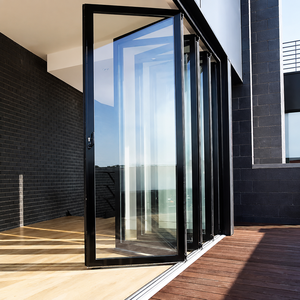
Engineered to comply with stringent fire containment protocols, severe cyclone pressures, and acoustic suppression parameters. Explore our premier manufactured architectural door and window systems.
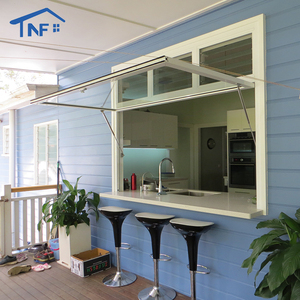
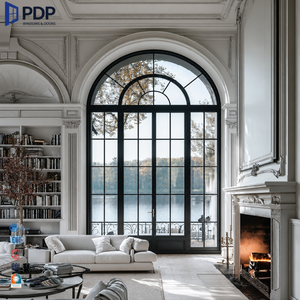
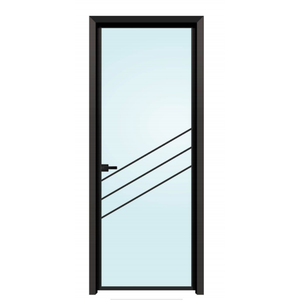
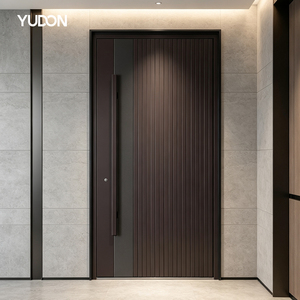
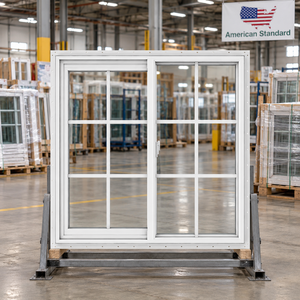
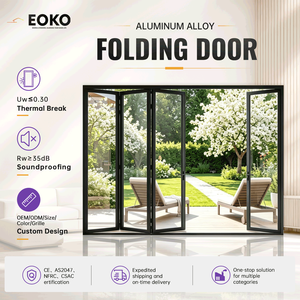
Aluminum fire-rated doors engineered by DERCHI bridge the critical gap between lightweight architectural minimalism and structural fire containment. Standard architectural aluminum begins to lose mechanical strength near 300°C and melts at approximately 660°C. To achieve 60, 90, and 120-minute fire ratings under UL 10C, NFPA 252, and BS EN 1634-1 protocols, our doors utilize reinforced, multi-cavity aviation-grade aluminum extrusion alloy 6063-T6 lined with inorganic ceramic fire-stop materials.
The interior profile chambers are pressure-filled with specialized non-combustible silicate-mineral matrices that act as endothermic energy sinks. Upon thermal exposure, these matrices undergo controlled chemical hydration release, absorbing latent heat and stabilizing core door leaf temperatures below hazardous ignition thresholds.

Modern fire door engineering has evolved beyond utilitarian steel assemblies. Current architectural standards demand transparency, high energy efficiency, and intelligent building integration.
Traditional metal fire doors create severe thermal bridges, failing stringent modern ASHRAE 90.1, Title 24, and European U-value directives. The next generation utilizes polyamide (PA66 GF25) thermal breaks reinforced with fire-inert ceramic ribs. This setup maintains system U-values as low as 1.4 W/m²K while satisfying UL-certified fire resistance without compromise.
Energy Decoupling →Hardware failure causes up to 82% of fire compartment breaches. Contemporary commercial doors feature fail-secure electromagnetic latches linked directly to building management systems (BMS). DERCHI assemblies include internal wiring conduits tested to maintain circuit integrity for 120 minutes during continuous flashover tests.
BMS Integration →Architects are replacing dark hollow-metal exit doors with full-lite glass fire assemblies. By using microscopic intumescent interlayer laminates that turn opaque under intense thermal load, our doors block both radiant heat (Class EW) and direct conductive heat (Class EI), protecting emergency egress pathways.
Optic Integrity →Key shifts across supply chains, international trade compliance, and project timelines are shaping how procurement managers source commercial fenestration from China.
| Evaluation Parameter | DERCHI High-Performance Aluminium | Generic Commercial Steel Fire Doors | Timber Core Flush Fire Doors |
|---|---|---|---|
| Structural Integrity & Deflection | High modulus 6063-T6 alloy with structural reinforcing inserts. Zero deflection in coastal winds. | Durable sheet steel, prone to seam buckling and corrosion under humid/marine exposure. | Prone to hygroscopic expansion, swelling, wood-rot, and termite degradation over time. |
| Thermal Transmittance (U-Value) | U ≤ 1.4 - 1.8 W/m²K (Polyamide thermal break) | U ≥ 2.8 - 3.4 W/m²K (Conductive core bridging) | U ≥ 2.0 - 2.5 W/m²K (Subject to air perimeter leak) |
| Corrosion & Salt-Spray Durability | Qualicoat Class 2 powder coating or fluorocarbon (PVDF); 3,000+ hrs salt-fog test passed. | Requires regular repainting; rusts along internal welds and lower kick-plates within 3-5 years. | Surface delamination and mold build-up in relative humidity over 70%. |
| Architectural & Glazing Versatility | Custom slim frames, oversized pivot hinges, dual-color anodizing, wide-vision panels. | Bulky industrial profiles, restricted glazing cutout dimensions, industrial aesthetic. | Limited clear vision glass, substantial leaf weight, prone to hinge fatigue. |
| Direct Carbon Footprint | 100% recyclable billet alloy produced via low-emission closed loop smelters. | High-temperature smelting lifecycle with significant primary fabrication emissions. | Requires sustainable forestry verification to prevent illegal logging risks. |
Global general contractors are shifting away from piecemeal sourcing models. Managing separate vendors for exterior hurricane glazing, main lobby pivot doors, garage entries, and compartmentalized fire doors introduces logistical drag, mismatched finishes, and coordination oversights.
Direct sourcing from DERCHI allows international builders to consolidate their entire fenestration package under unified CAD design approvals, aligned lead times, matching PVDF finishes, and single-container freight loads. This consolidation reduces cross-port logistics and handling expenses by up to 28%.
Strict regional building authorities—such as GCC municipal inspectors, Australian certifying authorities (NCC), and US local AHJs (Authorities Having Jurisdiction)—increasingly demand verified traceability for structural materials. Suppliers must provide mill test certificates, raw alloy composition breakdowns, and verified third-party laboratory test reports.
DERCHI backs every batch with full material traceability, providing digital documentation packs covering tensile extrusion ratings, cyclic testing validations, and destructive burn logs to simplify code approval on site.
Guangdong Dejiyoupin Doors and Windows Co., Ltd. ranks among China's top 10 fenestration manufacturers, providing dependable quality and dedicated export expertise from Foshan.

Coordinate entry doors, commercial pivots, hurricane windows, and automatic garage systems from our dedicated 180,000 m² facility.

Verified compliance with CE, ISO 9001, AS 2047, and UL fire standards, supported by more than 30 proprietary patents and formal lab reports.

In-house technical teams generate structural shop drawings, anchor load calculations, and BIM models tailored to project schedules.

Experienced technical sales teams assist from initial estimation through sea-freight crating and remote installation guidance.
Detailed answers to the key questions architects, facade engineers, and procurement directors ask during door specification.
Aluminum frames are reinforced with internal insulated thermal cores and high-density, non-combustible ceramic-mineral composites. Combined with heat-activated intumescent seals that expand to block smoke and flames, our doors pass 60, 90, and 120-minute furnace tests under UL 10C and EN 1634 standards.
Yes. We engineer hybrid assemblies that combine fire-rated insulated cores with structural impact laminate glass. These systems satisfy both thermal fire resistance and Florida Miami-Dade NOA wind-pressure and debris impact standards for exposed coastal facades.
Standard engineering and shop drawing sign-offs take 3 to 5 business days. Manufacturing runs typically require 25 to 35 days, depending on hardware and glass specifications. Ocean shipping from Shenzhen or Guangzhou ports to North America, Europe, or the Middle East averages 18 to 32 days.
Every door panel receives protective film, heavy foam corner protectors, vacuum-sealed plastic wrap, and a fully enclosed fumigated plywood crate with internal support beams. This crating stands up to ocean vibration, humidity shifts, and port handling.
Yes. Our CNC milling lines can prep lock pockets and edge cutouts for major architectural hardware systems, including dormakaba, ASSA ABLOY, Schlage, and standard smart multi-point systems, ensuring clean on-site hardware installation.
Please provide rough or finished opening dimensions, required fire rating duration (e.g., 60, 90, or 120 minutes), glass specifications, preferred surface finish (powder coat, PVDF, or anodized), hardware schedule, destination port, and project schedule.
Connect with our technical engineering team in Foshan to review your door schedules, verify local code compliance, and receive detailed factory-direct pricing for your project.
Contact Us