Engineered Aluminum Impact Entrance & Glazing Systems
Direct factory configurations manufactured under ISO 9001 and verified to ASTM, NFRC, CE, and AS 2047 international standards. Built with precision extruded aluminum profiles, advanced thermal breaks, and structural laminates.
Engineering Principles of Architectural Aluminum Impact Doors
Modern front entrance systems are subjected to severe lateral dynamic forces, extreme cyclic wind differentials, and solar thermal stress. Sourcing certified impact-rated aluminum doors requires understanding structural metallurgy, kinetic energy dissipation, and high-performance weather sealing.
Structural Alloy Metallurgy: 6063-T6 vs 6061-T6
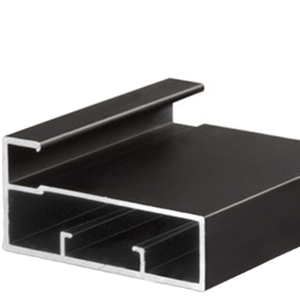
High-performance entry door stiles and rails utilize primary 6063-T6 or 6061-T6 architectural aluminum alloy with wall profiles ranging from 2.5mm to 3.8mm. The magnesium-silicon precipitation hardening delivers an ultimate tensile strength exceeding 240 MPa and yield strength of 215 MPa. This structural rigidity prevents deflection under extreme cyclic loads (+/- 70 to 100 PSF design pressure) during sustained category 5 hurricane wind events.
Glazing Physics: SGP SentryGlas® vs Heavy PVB
Impact certification under ASTM E1886/E1996 Missile Level D demands engineered composite glass panels. DERCHI integrates laminated architectural glass featuring 1.52mm or 2.28mm Kuraray SentryGlas® (SGP) ionoplast interlayers sandwiched between fully tempered glass layers. SGP interlayers exhibit five times the tear strength and up to one hundred times the rigidity of conventional PVB, maintaining total envelope hermeticity even when fractured by flying projectile impacts.
Multi-Chamber Polyamide Thermal Barriers
Eliminating the high thermal conductivity of raw aluminum ($k \approx 205 \text{ W/m}\cdot\text{K}$), our proprietary systems incorporate 24mm to 34mm PA66 GF25 (polyamide 6.6 reinforced with 25% glass fiber) thermal break struts. This multi-cavity design breaks the thermal bridge, achieving overall system U-factors down to $1.2 \text{ W/m}^2\text{K}$ ($0.21 \text{ BTU/h}\cdot\text{ft}^2\cdot^\circ\text{F}$), preventing internal condensation and drastically lowering building HVAC consumption in extreme climates.
Surface Engineering: AAMA 2605 PVDF & C4/C5 Marine Anodizing
Front doors deployed in coastal regions such as South Florida, the Caribbean, the Arabian Gulf, and Southeast Asia face severe salt spray degradation. DERCHI applies 3-coat 70% Kynar 500® / Hylar 5000® fluoropolymer (PVDF) electrostatic liquid coatings conforming to AAMA 2605 standards, or Class I 25-micron architectural hard anodizing. Tested in accordance with ASTM B117 salt fog chambers for 4,000+ hours, our finishes demonstrate zero chalking, blistering, or galvanic pitting over decades of direct maritime UV exposure.
| Performance Dimension | DERCHI Heavy Aluminum Impact | Commercial Cast Aluminum | Solid Teak / Hardwood | Standard Steel Entry Door |
|---|---|---|---|---|
| Hurricane Impact Rating | ASTM E1886/E1996 Level D, TAS 201/202/203 | Moderate (Depends on sub-core) | Non-Compliant (Shatters on debris) | Passes projectile, high permanent denting |
| Design Pressure (Windload) | +80 / -85 PSF (Certified) | +50 / -50 PSF | +30 / -35 PSF | +60 / -65 PSF |
| Coastal Corrosion Resistance | ASTM B117 > 4,000 Hrs (AAMA 2605) | High (Anodized/Powder Coated) | Low (Rapid biological/UV decay) | Very Low (Oxidizes/rusts at seams) |
| Thermal Insulation (U-Factor) | U = 0.22 - 0.28 (Polyamide Broken) | U = 0.45 - 0.55 (Solid core fill) | U = 0.38 - 0.48 (Natural wood) | U = 0.32 - 0.40 (Polyurethane core) |
| Dimensional Stability (Moisture) | Zero dimensional variance (< 0.01%) | Zero swelling or hygroscopic creep | High expansion/warping (> 3.5%) | Zero swelling, prone to hinge sag |
| Max Architectural Panel Size | Up to 2.4m W x 4.2m H (Pivot configs) | Up to 1.4m W x 3.0m H | Limited by timber splitting | Limited by dead weight (> 280kg) |
Future Procurement & Architectural Trends (2025–2030)
Global architectural demands for luxury residential villas, boutique resorts, and commercial developments are shifting rapidly. Sourcing directors must anticipate technological convergences in hardware, smart integration, and decarbonization.
Monumental Oversized Pivot Systems
Standard hinged doors are being replaced in ultra-luxury masterplans by floor-to-ceiling architectural pivot doors exceeding 3 meters in height and 2 meters in width. These systems rely on heavy-duty concealed German or Italian hydraulic floor springs supporting panel weights up to 500 kg. Engineering requirements focus on internal reinforced steel stiffeners to prevent thermal bimetallic deflection when temperature differentials between interior and exterior exceed 30°C.
Concealed Smart Access & Home Automation
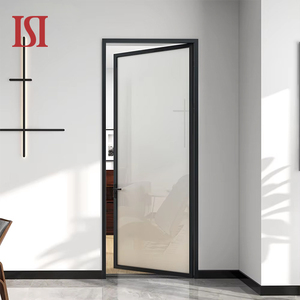
B2B buyers are demanding fully concealed multi-point motorized locking systems that interface seamlessly with central building management systems via KNX, Modbus, or Zigbee protocols. Integration of 3D facial recognition, biometric finger-vein scanners, and smartphone NFC entry built flush into customized architectural pull bars guarantees both military-grade perimeter security and clean minimalist visual lines.
Low-Carbon Circular Metallurgy & EPDs
Driven by North American LEED v4.1 and European CBAM (Carbon Border Adjustment Mechanism) directives, tier-one developers require Environmental Product Declarations (EPDs). Sourcing from China is transitioning toward secondary hydroelectric-smelted green aluminum containing up to 60% post-consumer scrap, slashing embodied carbon from $16.5 \text{ kg CO}_2\text{e/kg Al}$ down to under $4.0 \text{ kg CO}_2\text{e/kg Al}$.
Integrated Micro-Climate Acoustic Defense
Rapid global urbanization has elevated acoustic insulation to a baseline safety specification. Modern impact front doors integrate multi-stage vulcanized EPDM compression seals and asymmetric laminated glass units (e.g., 6mm Low-E + 1.52mm Acoustic PVB + 8mm clear tempered) to deliver sound transmission class (STC) ratings above 42 dB, effectively attenuating urban traffic noise alongside violent wind-driven acoustic loads.
Guangdong Dejiyoupin Doors & Windows Co., Ltd. (DERCHI)
Founded in Foshan, Guangdong—the epicenter of global aluminum extrusion and fenestration engineering—DERCHI has developed into a vertically integrated manufacturer delivering mission-critical exterior facade systems. Operating a modern 180,000 square meter industrial park with over 600 skilled technicians, DERCHI pairs robotic automated precision milling with rigorous metallurgical quality control.
Our OEM/ODM export division manages projects across the United States, Canada, Australia, the Middle East, and South Asia. By eliminating trading intermediaries, architectural specifiers and bulk importers gain direct engineering collaboration, certified finite element structural analysis (FEA), shop CAD drafting, and documented factory acceptance testing (FAT).

Dynamic In-House Test Laboratory
We run rigorous in-house cyclic wind load testing benches capable of exerting +/- 12,000 Pa air pressure, alongside calibrated water infiltration nozzles delivering 340 L/hr/m² of wind-driven water according to ASTM E331 and EN 12208 protocols.
Endurance Mechanical Cycle Testing
Heavy-duty hinges, multi-point lock mortises, and pivot hardware undergo automated robotic mechanical actuation testing to 200,000 continuous opening and closing cycles under full door leaf dead weights without mechanical failure or pivot drop.
Reinforced Sea-Freight Crating
Every single exterior impact door leaf and frame assembly is wrapped in electro-static protective film, corner-guarded with EPE high-density foam, moisture-sealed with desiccants, and enclosed within IPPC-certified fumigated marine plywood crates.
Frequently Asked Questions for B2B Importers & Specifiers
Comprehensive engineering, compliance, and supply chain answers addressing the technical hurdles of sourcing commercial and residential impact aluminum doors from China.
Q: How does DERCHI ensure impact doors comply with Florida Building Code (FBC) and Miami-Dade NOA standards?
Our doors are engineered to satisfy the testing parameters defined under TAS 201 (Large and Small Missile Impact Test), TAS 202 (Static Air Pressure), and TAS 203 (Cyclic Wind Pressure Loading), which parallel ASTM E1886 and ASTM E1996. Our technical team works with third-party accredited laboratories (such as Intertek and SGS) to provide comprehensive engineering calculations, structural glass stress certifications, and anchor schedule documentation required by municipal building officials.
Q: What is the structural difference between Large Missile Impact Level D and Level E?
Missile Level D testing involves launching a 9-pound (4.1 kg) 2x4 Southern Yellow Pine lumber projectile at a velocity of 50 feet per second (34 mph / 55 km/h) impacting the center and corner of the door panel, followed by 9,000 cyclic positive and negative air pressure cycles. Missile Level E is an extreme specification for critical infrastructure (hospitals, emergency stations) requiring a 9-pound 2x4 launched at 80 feet per second (55 mph / 88 km/h). DERCHI utilizes structural SGP SentryGlas interlayers with custom-engineered aluminum glazing pockets to meet both Level D and specialized Level E performance thresholds.
Q: Can oversized modern aluminum pivot doors maintain airtightness and water tightness during monsoons?
Yes. While traditional pivot doors can be challenging to seal due to their rotational axis, DERCHI overcomes this through dual-stage perimeter engineering: automated drop-down mechanical guillotine seals at the bottom rail, continuous magnetic compression gaskets along vertical stiles, and engineered sub-sill drainage manifolds with one-way weep valves. This system maintains water tightness up to 720 Pa of wind-driven precipitation, preventing moisture ingress even during severe cyclonic squalls.
Q: What documentation is required from the client to initiate a precise custom factory quotation?
To generate a fully calculated B2B quotation and structural feasibility review, please supply: rough opening dimensions (or finished door schedule), preferred structural profile series (thermal-break or standard), glass build-up specification (e.g., 6mm Low-E + 1.52 SGP + 6mm Clear), required surface finish (AAMA 2604/2605 powder coat or anodized color code), hardware access requirements (biometric smart lock, panic bar, multi-point mechanical), and target shipping terms (FOB Shenzhen/Guangzhou or CIF destination port).
Q: How does aluminum perform relative to thermal movement on large dark-colored exterior doors?
Dark exterior surfaces (such as charcoal grey, matte black, or bronze) can reach surface temperatures exceeding 80°C in tropical sun, while interior air-conditioned spaces remain at 22°C. This extreme temperature differential induces the "bimetallic curling effect." DERCHI mitigates this phenomenon by integrating split-profile polyamide thermal struts with rolling shear-stress reliefs and internal tensioning rods. This engineered compensation ensures latch bolts remain perfectly aligned without binding throughout seasonal temperature swings.
Q: What is the standard production lead time and international freight transit timeline?
Standard production lead time for custom engineered impact door systems is 25 to 35 business days following final CAD shop drawing sign-off and color chip approval. Ocean transit from South China ports (Nansha, Yantian, Shekou) varies by region: 14 to 20 days to US West Coast, 28 to 35 days to US East Coast, 20 to 25 days to European gateways (Rotterdam, Hamburg), and 12 to 18 days to major South Asian and Australian hubs. Air freight is available for urgent architectural hardware and structural samples.
Connect with DERCHI Senior Engineering Specialists
Request comprehensive technical catalogs, certified wind load test reports, BIM/CAD section details, or an immediate commercial quotation for your development or wholesale supply line.