High-Performance Architectural Systems Catalog
Engineered for high pedestrian transit frequencies, extreme wind load deflection criteria, thermal isolation, and seamless storefront architectural integration.
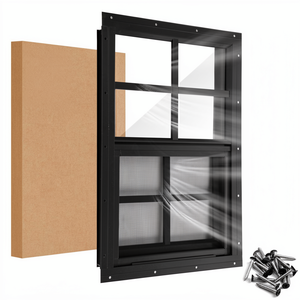
JONRIOX 12" W X 18" H Sliding Shed Window Aluminum Grey Flush Mount
- 6063-T5 Structural Extrusion
- Stainless Steel Insect Screen
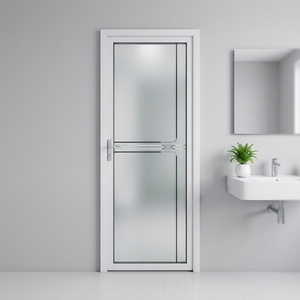
Modern Design Aluminum Moisture Proof Privacy Glass House Door
- Anodized Anti-Oxidation Frame
- Obscure Tempered Safety Glass
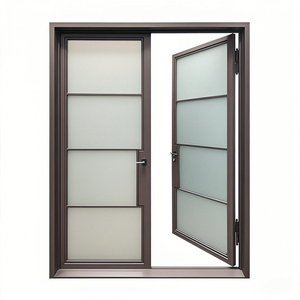
Villa Interior Aluminium Double Glazed French Entrance Casement Door
- Polyamide Thermal Break Core
- Multi-Point Compression Seal
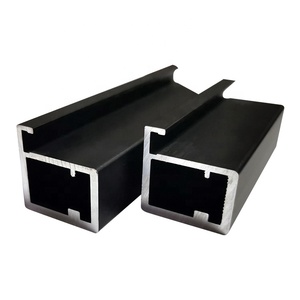
Anodized Brushed Custom Poland Glass Kitchen Cabinet Profile
- High-Precision CNC Machined
- Class 1 Anodized Film >15µm
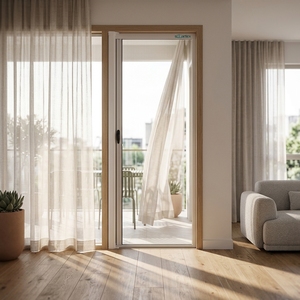
DIY Retractable Screen Door Fiberglass Mesh Roll Up For Patio Use
- Self-Tensioning Spring Track
- Fire-Resistant Fiberglass Mesh
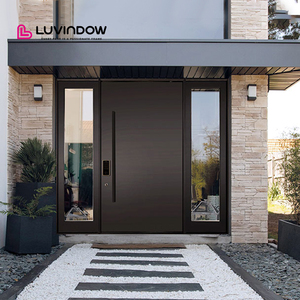
High End Luxury Tempering Glass Outdoor Aluminum Entry Residential Doors
- Heavy-Duty Floor Spring Pivot
- Integrated Smart Sensor System
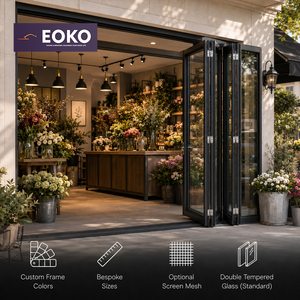
EOKO EN 14351-1 Heavy Duty Hinge Aluminum Bi-Fold Boutique Door
- EN 14351-1 Commercial Tested
- Top-Hung Flush Threshold Guide
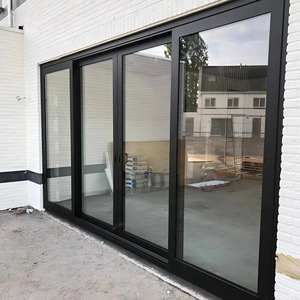
Modern Aluminum Glass Sliding Door Finished Surface Commercial Office
- Ultra-Quiet Stainless Steel Bogie
- Slim Sightline Interlock Stile
Structural Metallurgy & Mechanical Integrity in Commercial Shop Doors
Commercial entrance systems operate in fundamentally more grueling physical environments than standard residential fenestration. A retail storefront door installed within a high-density urban shopping plaza or hotel concourse may undergo upwards of 2,000 opening and closing cycles per operational day. In China wholesale manufacturing, the primary differentiator separating tier-one export products from lower-tier commercial stock lies in the precise composition of the aluminum extrusion alloy, the tempering profile, and the structural wall thickness tolerances.
Our manufacturing cluster leverages primary virgin 6063 billet, heat-treated to a T5 or T6 temper following hot extrusion. The addition of controlled magnesium (0.45%–0.9%) and silicon (0.2%–0.6%) precipitations guarantees an ultimate tensile strength exceeding 205 MPa and a yield strength exceeding 170 MPa. While general residential extrusions often utilize nominal profile thicknesses between 1.2 mm and 1.4 mm, our dedicated commercial shop front systems enforce a structural wall thickness threshold between 2.0 mm and 3.0 mm across all primary load-bearing jambs, transoms, and corner cleats.
Engineering Imperative: Under EN 14351-1 and ASTM E330 structural testing, insufficient wall thickness below 2.0 mm induces localized stress fractures around continuous gear hinges and overhead concealed closer mounting plates when subjected to recurring gust wind deflections exceeding 2.5 kPa.
Furthermore, structural corner connectivity determines whether a shop door will maintain diagonal squareness across a multi-year service lifecycle. Rather than relying solely on simple friction screw connections, our factory implements heavy hydraulic corner crimping augmented with two-part thixotropic polyurethane adhesives and cast-aluminum internal corner keys. This prevents sag-induced frame binding, ensuring smooth operation even when supporting heavy-duty acoustic insulated glazing units weighing up to 180 kg per active leaf.
Comparative Engineering Matrix: Commercial System Typologies
When selecting architectural entrance systems from a wholesale manufacturer in China, procurement teams must balance structural span requirements, thermal insulation, opening aperture clear width, and hardware kinematics:
| System Typology | Alloy Spec & Wall Depth | Acoustic Rating (Rw) | Air Permeability (EN 12207) | Water Resistance (EN 12208) | Max Sash Load |
|---|---|---|---|---|---|
| Heavy Center-Hung Pivot Door | 6063-T6 / 2.5mm – 3.0mm | Rw 38 dB – 42 dB | Class 4 (< 0.75 m³/h·m) | Class 9A (600 Pa) | 350 kg / leaf |
| Commercial Storefront Bi-Fold | 6063-T5 / 2.0mm – 2.5mm | Rw 35 dB – 40 dB | Class 3 (< 1.50 m³/h·m) | Class 7A (300 Pa) | 120 kg / panel |
| Heavy-Duty Commercial Slider | 6063-T6 / 2.0mm – 2.2mm | Rw 32 dB – 36 dB | Class 3 (< 1.50 m³/h·m) | Class 6A (250 Pa) | 250 kg / leaf |
| Flush Double-Glazed French Casement | 6063-T5 / 1.8mm – 2.0mm | Rw 36 dB – 41 dB | Class 4 (< 0.75 m³/h·m) | Class E750 (750 Pa) | 150 kg / leaf |
Surface Passivation & Thermal Barrier Innovation
Modern architectural fenestration exported from China must withstand diverse microclimates, ranging from high-humidity coastal zones with severe airborne salinity (e.g., Mumbai, Karachi, Miami, Sydney) to high-altitude deserts characterized by extreme UV radiation and 40°C diurnal temperature shifts (e.g., Delhi, Riyadh, Phoenix). Surface finish failure results in chalking, filiform corrosion, and intergranular degradation of the alloy matrix.
To eliminate these risks, our export lines incorporate three distinct high-specification surface treatment methodologies:
- Class 1 Anodic Oxidation (AAMA 611): With an electrolytic oxide layer measured between 18 µm and 25 µm, sealed with hot demineralized water and nickel acetate salts, achieving an abrasion resistance hardness second only to diamond.
- 70% PVDF Fluorocarbon Coatings (AAMA 2605): Utilizing high-grade resin systems (Kynar 500 or Hylar 5000) applied in automated cleanroom spray lines with primer, color coat, and clear protective barrier. Resists 4,000+ hours of continuous neutral salt spray (ASTM B117) and 10 years of Florida weathering exposure with color delta-E under 5.0.
- Hyper-Durable TGIC-Free Polyester Powder Coating (Qualicoat Class 2): Applied electrostatically at 60 µm–80 µm film thickness, providing outstanding impact toughness and scratch resistance for busy commercial entryways.
Thermal Separation Engineering: Polyamide Break Technology
Traditional non-thermal aluminium profiles exhibit an exceptionally high thermal conductivity value ($k \approx 160\text{ W/m}\cdot\text{K}$), transforming the shop door into a massive thermal bridge that increases building HVAC operating loads and causes surface condensation. Our thermal break shop doors incorporate precision-crimped PA66 GF25 (polyamide 6.6 reinforced with 25% continuous transverse glass fibers) multi-chamber thermal struts. The coefficient of thermal expansion of PA66 GF25 ($2.5 \times 10^{-5}\text{ K}^{-1}$) precisely matches that of aluminum ($2.3 \times 10^{-5}\text{ K}^{-1}$), ensuring zero shear delamination or structural buckling across extreme ambient operating ranges between -30°C and +70°C.
Enterprise Strengths & Foshan Manufacturing Clustered Value
Direct sourcing from a verified manufacturer provides deep engineering accountability, eliminating intermediary margins while securing certified performance documentation for project tenders.
180,000 m² Integrated Production Campus
Located in the heart of Foshan, Guangdong—the world's foremost aluminum architectural processing hub—our facility houses high-tonnage extrusion presses, multi-axis automated CNC profile machining centers, and automated glass tempering lines under one unified quality management protocol.
Stringent Multi-Standard Certification
Every commercial shop front door is rigorously pre-tested to international benchmarks including European CE (EN 14351-1), Australian AS 2047 N6 cyclonic testing, ISO 9001:2015 quality assurance, and UL 10C positive pressure fire testing ratings, supported by over 30 utility and structural patents.
Full-Cycle CAD/BIM Shop Drawings
Our dedicated bilingual fenestration engineering teams generate structural load calculations, thermal simulation isotherms (LBNL THERM), and precise parametric CAD shop drawings tailored to architect specifications, door schedules, and specialized entrance hardware integrations.
Future Procurement Trends in Aluminium Shop Entrances (2025–2030)
Global commercial procurement is transitioning away from commoditized frame purchasing toward integrated, climate-resilient, and intelligent entrance systems. Architects and bulk buyers should evaluate three transformative vectors:
1. Decarbonization & CBAM Low-Carbon Billets
With the implementation of the European Union's Carbon Border Adjustment Mechanism (CBAM) and corporate Scope 3 greenhouse gas reporting, global buyers demand verified low-carbon aluminum. Sourcing trends favor Chinese extruders utilizing hydro-powered smelted aluminum ingot and closed-loop scrap recycling, achieving embodied carbon footprints below 4.0 kg CO2e/kg Al.
2. Integrated Smart Access & BMS Telemetry
Manual shop doors are rapidly being replaced by intelligent motorized apertures equipped with low-energy brushless DC concealed swing operators, micro-radar safety curtains, motorized multipoint latches, and IoT protocols compatible with BACnet and KNX commercial building management systems.
3. Monolithic Glass Spans with Ultra-Slim Sightlines
Retail commercial facades are moving toward maximum architectural transparency. High-strength structural silicone glazing (SSG) and reinforced box-mullion systems allow shop door panels to reach heights of 4.5 meters with interlock stiles narrower than 25 mm, delivering panoramic retail views while withstanding extreme structural wind loads.
Engineering Failure Modes in Wholesale Sourcing & Factory Countermeasures
B2B commercial door procurement failures generally result from underestimating physical wear, regional atmospheric dynamics, or freight stresses. Below are the four most frequent failure modes observed across overseas construction sites and the preventative engineering protocols we implement:
Failure: Sagging & Latch Misalignment
Caused by dynamic cycling loads acting on standard screw-fastened hinges, leading to frame racking. Countermeasure: We mandate 3D-adjustable heavy-duty continuous gear hinges or high-tensile stainless steel floor springs rated for >500,000 cycles (EN 1935 Class 14).
Failure: Water Ingress at Door Thresholds
Poor drainage engineering during monsoon or severe driving rain. Countermeasure: Installation of pressure-equalized sub-sills with concealed weep slots, baffle valves, and dual-fin continuous EPDM compression gaskets achieving Class 9A (600 Pa) water tightness.
Failure: Coastal Filiform Corrosion
Occurs beneath poorly pre-treated powder coat finishes in marine atmospheres. Countermeasure: Mandatory multi-stage acid-etch chromate or chromium-free zirconium pre-passivation, followed by multi-coat fluorocarbon PVDF baking meeting AAMA 2605.
Failure: Ocean Freight Vibration Breakage
Chafing, moisture condensation, and micro-cracking of glazed units during maritime transit. Countermeasure: Fully enclosed fumigated marine-grade plywood crates, desiccant air bags, PE protective film, and structural corner EVA buffer blocks.
Commercial Aluminium Shop Doors: Technical Buyer FAQ
Addressing the core technical, regulatory, logistical, and commercial inquiries posed by international architects, project developers, and bulk door distributors.
What minimum profile wall thickness is recommended for heavy-traffic commercial shop entrances?
How does Foshan wholesale manufacturing optimize sea freight logistics and CBM loading?
What is the functional difference between AAMA 2604 and AAMA 2605 surface finishes?
Can bespoke architectural shop doors integrate commercial access control and motorized hardware?
What international testing certifications should commercial importers verify prior to ordering?
- Europe & International: CE Marking under EN 14351-1 (covering air permeability EN 12207, water tightness EN 12208, and wind resistance EN 12210).
- Australia & Oceania: AS 2047 and AS 1288 (including cyclonic wind pressure testing to ratings up to N6 / C4).
- North America: AAMA/WDMA/CSA 101/I.S.2/A440 (NAFS) and ASTM E283, E330, and E331 test sequences.
- Life Safety: UL 10C / NFPA 252 for positive pressure fire door assemblies where required by local egress codes.
What is the standard production lead time for bespoke extrusion dies and powder-coat finishes?
Initiate Your Commercial Entrance Specification
Connect directly with our Foshan engineering and estimation division for structural wind load reviews, BIM/CAD shop drawings, and wholesale factory-direct container quotations on FOB or CIF terms worldwide.