Precision Architectural Door & Window Series
Explore our export-certified product lines designed for high wind load tolerance, thermal insulation, and multi-point perimeter security across global construction environments.
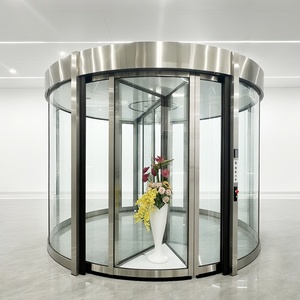
Modern Style Mall Main Entrance Doors Aluminum Revolving Doors
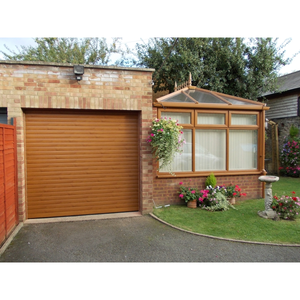
Powder Coated Tambour Aluminium Typhoon Roller Shutter Door
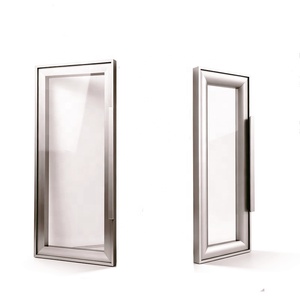
Aluminum Frame Toughened Glass Wardrobe Door Minimalist
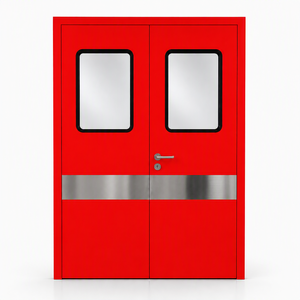
Double Swing Glass Door Fire Rated Emergency Exit Door
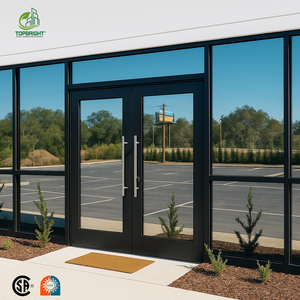
Topbright Commercial Soundproof Double Glass Storefront Door
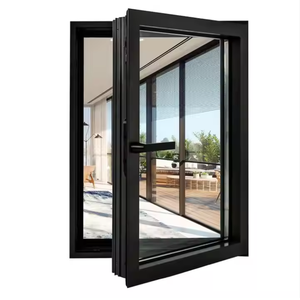
High Quality Modern Aluminum Double/Triple Glazed Casement
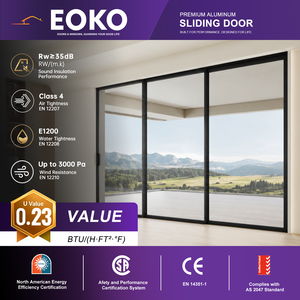
EOKO NFRC Triple Glazed Low-E Thermal Break Sliding Doors
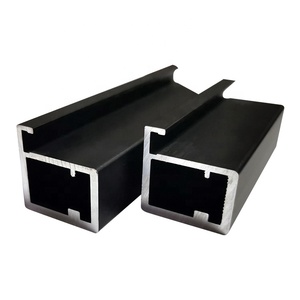
Anodized Brushed Custom Glass Kitchen Cabinet Aluminum Profile
Engineering Architecture of High-Performance Aluminum Tilt and Turn Windows
In the international fenestration arena, procuring aluminum tilt and turn windows requires navigating stringent energy codes, cyclic wind load demands, and ergonomic structural criteria. As a preeminent China wholesale aluminum tilt and turn windows supplier & manufacturer, Guangdong Dejiyoupin Doors and Windows Co., Ltd. (DERCHI) engineers European-standard tilt and turn assemblies that seamlessly integrate dual functionality: micro-ventilation in the tilt position and complete clearance in the turn mode. Utilizing advanced 6063-T6 architectural grade aluminum extrusions combined with continuous polyamide (PA66 GF25) thermal breaks, these systems minimize linear thermal bridges, preventing condensation and lowering envelope heating and cooling loads across extreme continental climates.
Critical Architectural Standard: Modern building regulations (including ASHRAE 90.1, CE EN 14351-1, and Australian AS 2047) demand verified air infiltration under 0.1 CFM/ft² and overall window U-values below 1.4 W/m²·K (0.24 BTU/hr·ft²·°F). DERCHI multi-chambered thermal profiles equipped with argon-infilled Low-E insulating glass units (IGUs) achieve these thresholds with third-party testing accreditation.
Structural Extrusions & Thermal Barrier Anatomy
The performance core of a precision aluminum tilt and turn window lies in its extrusion wall thickness and thermal insulator geometry. While nominal commercial profiles settle at 1.4mm to 1.6mm thickness, our structural systems utilize heavy-duty 1.8mm to 2.2mm profiles. This structural margin accommodates heavy triple-laminated glass panes up to 52mm overall thickness without sash deflection. Multi-chambered composite profiles effectively interrupt conductive heat paths, while factory-crimped multi-point mushroom-head locking gear from industry leaders like Siegenia, Roto, and GU creates perimeter compression against triple-layer EPDM continuous weatherstripping.
| Performance Criterion | Industry Standard Profile | DERCHI Heavy-Duty Thermal Break Series | Engineering Benefit |
|---|---|---|---|
| Alloy Composition | Recycled / Mixed Grade Aluminum | Primary 6063-T6 Virgin Billet Aluminum | Superior tensile strength, tensile yield ≥ 160 MPa |
| Thermal Insulation (Uf) | 2.8 – 3.2 W/m²·K | 1.3 – 1.6 W/m²·K (PA66 GF25 34mm) | Passive House performance compliant, zero condensation |
| Acoustic Attenuation (Rw) | 28 – 32 dB | 42 – 48 dB (with acoustic PVB laminate) | Optimal noise damping adjacent to urban transit hubs |
| Wind Load Resistance | Class 3 (1200 Pa) | Class 5 / AS 2047 N6 (> 3000 Pa) | Engineered for high-rise facades and coastal cyclone regions |
| Water Tightness | 300 Pa (Class 7A) | Class 9A (> 600 Pa) Independent Pressure Cavity | Zero water penetration during monsoon conditions |
Multi-Stage Perimeter Sealing & Water Management Mechanics
Ordinary outward-swing or sliding windows suffer premature gasket relaxation and water leakage under elevated driving rain. By contrast, aluminum tilt-turn windows pivot inwardly against an active double-rabbet frame. The kinetic motion of closing the operating handle activates tie-rods driving multiple hardened steel locking cams into reinforced strike plates positioned around the perimeter. As the sash pulls flush against the frame, three distinct barriers—the exterior deflection barrier, the internal equalizing pressure chamber, and the interior EPDM acoustic sealing gasket—work simultaneously. Water that enters the outer drainage zone is instantly expelled through concealed pressure-compensated weep holes with anti-backdraft valves.
High-Efficiency Tilt-and-Turn Capabilities
Engineered for architects, commercial general contractors, and luxury window dealers who refuse to compromise on facade longevity or envelope airtightness.
Dual Opening Kinematics
Tilt mode angles the sash open 100mm at the top for draft-free ventilation that maintains security and rain protection; turn mode swings open 180° for full egress and effortless exterior glass cleaning.
Polyamide Thermal Isolation
Features German-engineered Technoform PA66 GF25 thermal insulating strips with integrated multi-cavity insulation foam, suppressing thermal bridges and preventing frame sweat under extreme ambient humidity.
Heavy-Duty Concealed Hinges
Architectural clean lines with flush concealed hinges rated up to 180kg sash weight. Eliminates gasket pinching and air leaks around the perimeter while accommodating thick triple glazing.
Certified Acoustic Shielding
Multi-chamber extrusions paired with asymmetric acoustic PVB laminates provide laboratory-verified sound transmission class (STC) ratings up to 45dB, isolating airport and transit noise.
Fluorocarbon & Powder Finishes
Qualicoat Class 2 certified electrostatic polyester powder coatings and AkzoNobel PVDF fluorocarbon coatings resist intense UV radiation, chalking, fading, and coastal salt spray corrosion.
RC2 / RC3 Burglar Resistance
Heavy interlocking mushroom cams, hardened steel keepers, anti-drill gearbox plates, and internal glazing beads make exterior pane removal impossible, meeting European RC2/RC3 security classifications.
Future Procurement Trends in Wholesale Architectural Windows
Understanding shifting regulatory baselines, advanced material sciences, and digital supply chain strategies allows global real estate developers to future-proof their supply pipeline.
Passive House Standard Harmonization
Global regulatory bodies are mandating stringent thermal envelope criteria. Sourcing teams are transitioning away from standard double-pane 60mm systems toward 75mm–90mm system depths featuring triple-glazed Low-E argon assemblies with warm-edge composite spacers to achieve whole-window Uw ≤ 0.8 W/m²·K.
Smart Building & Automated Actuation
Modern tilt-turn windows are integrating concealed 24V electric actuators connected to BACnet or Modbus home automation. Automated micro-ventilation cycles coordinate with HVAC systems to optimize indoor air quality (IAQ) and nocturnal purging without compromising perimeter security.
Ultra-Slim Sightlines & Flush Geometry
Architects demand broader uninterrupted glass surfaces. The development focus has shifted to concealed sashes where the operable frame is hidden completely behind the exterior outer jamb, maximizing natural daylight transmission while providing a unified, minimalist facade aesthetic.
BIM Integration & Complete Digital Prototyping
Procuring wholesale fenestration from China now requires full digital integration. Developers expect parametric Revit and IFC BIM models, verified FEA thermal calculations, and CAD shop drawings at the tender phase, eliminating field dimension discrepancies before mass CNC extrusion cutting begins.
Decarbonized Metallurgy & Life Cycle Assessments (EPD)
Leading international developers require environmental product declarations (EPDs) validating the use of low-carbon aluminum smelted with renewable hydro-energy alongside recycled scrap billets. Sourcing from certified Chinese manufacturers ensures compliance with European CBAM regulations and LEED Platinum accreditation benchmarks.
Manufacturing Scale Backed by Foshan Industrial Cluster
Guangdong Dejiyoupin Doors and Windows Co., Ltd. (DERCHI) represents China's manufacturing echelon in high-end architectural fenestration. Operating from our 180,000 square meter production facility in Foshan, Guangdong—the epicenter of global aluminum extrusion engineering—our team of over 600 skilled technicians and in-house fenestration specialists executes custom projects for high-end residential estates, institutional complexes, and five-star commercial resorts.
With over 25 years of manufacturing excellence, our production lines utilize multi-axis CNC machining centers, automated corner-crimping matrixes with dual-component polyurethane injectables, and computerized glass sealing systems. Sourcing directly from our manufacturing facility removes intermediate trading margins, shortens project lead times, and guarantees accountability from initial CAD shop drawings to export shipping crating.

Frequently Asked Questions for Wholesale Window Buyers
Comprehensive technical and commercial answers addressing structural engineering, minimum order quantities, logistics, and quality assurance protocols.
What profile and hardware brands do you integrate into your tilt and turn windows?
We build our window systems around primary 6063-T6 architectural aluminum profiles with wall thicknesses ranging from 1.6mm to 2.2mm. For hardware, we partner directly with European industry leaders including Siegenia, Roto, GU, and Hoppe, as well as premium tier-one Chinese precision hardware manufacturers, offering multi-point locking gear rated for over 50,000 continuous operating cycles.
Can your aluminum tilt and turn windows comply with regional hurricane and cyclone standards?
Yes. Our impact-rated architectural series are tested to meet Florida Building Code (TAS 201/202/203) and Australian AS 2047 N6 cyclone benchmarks. By utilizing structural silicone glazing (SSG), heavier internal mullion reinforcements, and SentryGlas (SGP) laminated glass configurations, our windows withstand cyclic design wind pressures exceeding 4,500 Pa.
What is the standard manufacturing lead time and minimum order quantity (MOQ)?
For standard architectural profiles with powder-coated RAL finishes, manufacturing lead time typically spans 25 to 35 business days following shop drawing approval. For complex custom anodized or custom-extruded dies, lead times run approximately 40 to 45 days. Our minimum order quantity starts flexibly at a single project container (or 50 m² for pilot residential mockups).
How are units packaged to prevent frame and glass damage during ocean transit?
Every sash and frame is shielded by protective peelable film, surrounded with reinforced corner armor, wrapped in high-density pearl cotton sheeting, and secured inside solid, fully enclosed fumigated plywood crates. Crates feature integrated forklift skids and moisture desiccant bags to prevent moisture staining during extended container sea freight.
Do you support customized architectural dimensions, finishes, and dual-color options?
Every window is built strictly to order. Our technical department prepares millimeter-accurate CAD shop drawings tailored to your rough opening schedules. Because we assemble our thermal break assemblies in-house, we readily supply dual-color finishes—allowing clients to specify dark bronze anodized or architectural black on the exterior facade while maintaining custom wood-grain or white finishes indoors.
What third-party quality certifications and warranties do you provide?
DERCHI products are verified under CE, ISO 9001, AS 2047, and UL fire standards. We back our aluminum extrusions and structural integrity with a comprehensive 10-year factory warranty, backed by available hardware performance certifications, glass acoustic test reports, and thermal calculation models for local building inspector sign-off.