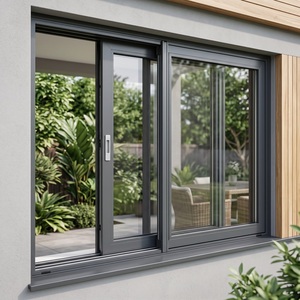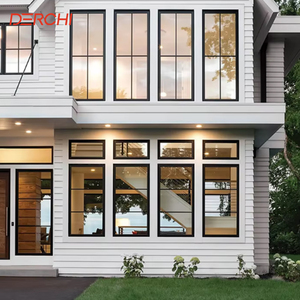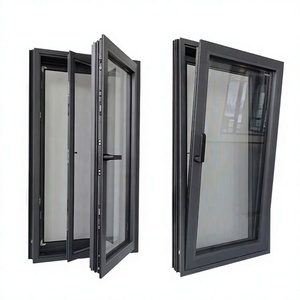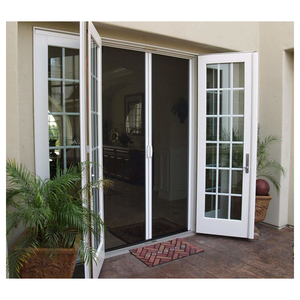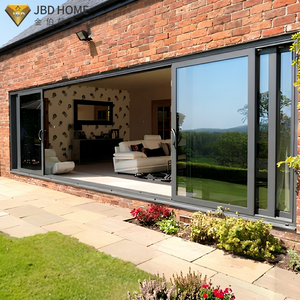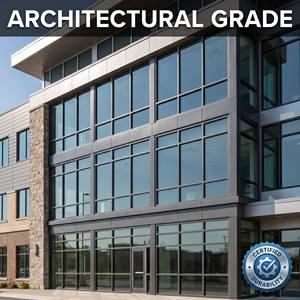
Custom OEM Aluminium Ventilation Window Supplier & Suppliers

Precision-Engineered Architectural Fenestration Systems: Thermal Break Micro-Ventilation, High-Wind Coastal Deflection & Commercial Facade Solutions

Enterprise Product Series

High-Performance Custom Aluminium Ventilation Solutions

Engineered to global structural building standards, supporting extreme acoustic isolation, passive aerodynamic airflow, and precision architectural integration.
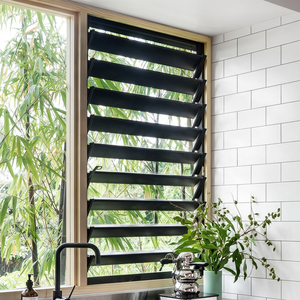
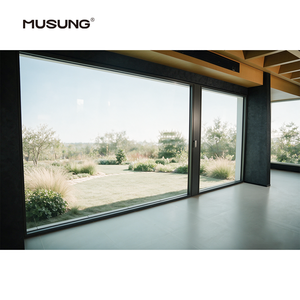
Send an Inquiry
Technical Whitepaper

Structural Aerodynamics & Thermal-Mechanical Engineering

A comprehensive technical assessment on micro-ventilation, thermodynamic isolation, and alloy integrity under cyclic pressure loads.

Thermodynamic Physics of Micro-Ventilation & Cavity Pressure Equalization

In contemporary high-rise architecture and luxury residential building envelopes, conventional ventilation mechanisms frequently introduce unacceptable thermal bridging, rain penetration risks, and acoustic compromises. As an authoritative OEM aluminium ventilation window manufacturer, DERCHI addresses these critical failure modes via multi-chambered 6063-T6/6061-T6 structural profiles incorporating polyamide thermal break strips (PA66 GF25) reinforced with 25% transverse glass fibers.

Pressure Equalization Principle (Rain Screen Technology)

Through computational fluid dynamics (CFD) optimization, our ventilation channels are decoupled into three distinct pressure chambers. By matching internal cavity pressure with external dynamic wind pressure within microseconds, capillary moisture transmission is physically neutralized, preserving water tightness ratings above 700 Pa even under torrential monsoon vectors.

Acoustic Decoupling vs. Continuous Aeration

Our micro-ventilation architectures deploy labyrinthine acoustic attenuation baffles integrated within the sash-to-frame thermal breaks. This geometric configuration dissipates high-velocity sound waves (35–45 dB attenuation under ISO 10140 standards) while facilitating 8–18 m³/h continuous air exchange without relying on motorized HVAC power cycles.

The mechanical durability of custom aluminum fenestration relies heavily on alloy metallurgy. By strictly controlling the magnesium-silicon ratio (0.45%–0.9% Mg, 0.2%–0.6% Si), our profile extrusions maintain tensile yield strengths exceeding 160 MPa. Surface finishes engineered with AkzoNobel architectural-grade PVDF fluorocarbon coatings or Class 1 anodization layers deliver salt spray resistance exceeding 4,000 hours under ASTM B117 protocols, effectively safeguarding structural life in harsh maritime, highly saline, and industrial settings.

Future Procurement & Technological Trends in Architectural Fenestration

The commercial fenestration market is experiencing a profound paradigm shift driven by stringent decarbonization policies, passive house standards (Passivhaus), and building automation integration. Project directors, EPC contractors, and master developers must calibrate their technical specifications against several imminent trajectory transformations:

1. Mechatronic Smart Building Actuation

Transitioning from mechanical manual stays to concealed low-voltage (24V DC) brushless servo actuators. Modern building management systems (BMS) dynamically modulate ventilation aperture percentages based on real-time IAQ (CO2, VOC, PM2.5) and outdoor temperature-humidity sensor inputs.

2. Strict Life-Cycle Decarbonization (EPD)

Procurement teams increasingly mandate Environmental Product Declarations (EPD). Global tenders prioritize low-carbon secondary aluminum profiles produced through renewable hydroelectric smelting, slashing embodied carbon from 18 kg CO2e/kg to sub-4 kg CO2e/kg.

3. Extreme Climate Resilience (AS 2047 / N6)

Accelerating global cyclone severity demands certified structural wind load deflections (Ultimate Wind Pressure > 4500 Pa). High-rise ventilation designs must balance ultra-thin visual sightlines (sub-35mm frame profiles) with internal heavy-gauge steel reinforcement sleeves.

Enterprise Hegemony & Manufacturing Depth

Why Tier-1 Contractors Rely on DERCHI Engineering

Recognized among China's Top 10 premium window and door manufacturers, operating world-class processing centers in Foshan's high-precision industrial cluster.

25+
Years Manufacturing Prowess
180,000 m²
Intelligent Industrial Plant
600+
Skilled Engineers & Technicians
100+
Global Patents & Certifications

Full OEM/ODM CAD Customization

Our dedicated engineering department drafts structural FEA stress diagrams, thermal isotherm cross-sections, and parametric CAD/BIM shop drawings within 24 hours to match architectural specifications.

Rigorous International Validation

Factory-tested systems certified against Australian AS 2047 N6, North American NAFS/AAMA, European CE standards, and UL fire-retardant endurance specifications, providing zero-liability clearance.

Single-Source Factory Direct Integration

Direct supply from Foshan eliminates trading-house margins, guarantees batch-to-batch metallurgical consistency, and enforces multi-axis CNC tolerance controls down to ±0.2mm precision.

Heavy-Duty Protective Export Crating

Finished frames and insulating glass units (IGU) undergo multi-layer surface taping, corner shock-absorption guards, and fully enclosed fumigated plywood sea crates designed for long ocean freight voyages.

Procurement Clarity

Frequently Asked Questions on Aluminium Ventilation Windows

Detailed engineering, logistical, and structural answers resolving common procurement ambiguities for global developers, architects, and quantity surveyors.

What are the critical parameters for specifying aluminum alloy grades in coastal vs. inland projects?

+
For coastal zones within 5 kilometers of the shoreline, DERCHI prescribes architectural 6063-T6 aluminum profiles with an extrusion wall thickness exceeding 2.0 mm (meeting AS 2047 and commercial curtain wall guidelines). In these environments, profiles receive high-durability fluorocarbon (PVDF) 3-coat finishes containing 70% Kynar 500 resin or an anodized film exceeding 20 microns (Grade AA25). For inland or sub-tropical developments with standard humidity levels, heavy-duty thermosetting polyester powder coatings (minimum 60–80 microns) deliver robust UV protection, chemical balance, and mechanical impact durability.

How do custom OEM ventilation windows balance acoustic isolation with airflow circulation?

+
Conventional windows require open sashes that compromise acoustic integrity. DERCHI engineers micro-ventilation channels featuring multi-chamber acoustic tortuous paths lined with micro-porous sound-absorbing synthetic materials. When paired with high-performance double or triple insulated glass units (e.g., 6mm Low-E + 12Ar + 6mm + 12Ar + 6mm laminated acoustic PVB), our systems achieve a weighted sound reduction index (Rw) up to 42 dB while maintaining passive air infiltration exchange rates of 12 m³/h per linear meter, complying with urban residential noise abatements.

What international testing benchmarks certify DERCHI window systems against severe weather events?

+
Our products undergo full-scale fenestration testing covering three primary performance vectors: Structural Wind Resistance (ASTM E330 / AS 4420.2), Air Infiltration (ASTM E283), and Water Penetration Resistance under Dynamic Pressure (ASTM E547 / AS 4420.5). For cyclone-prone regions such as Florida (USA), Northern Australia, and coastal South Asia, our heavy-gauge casement and tilt-turn systems achieve structural deflection compliance under N6/C4 wind ratings (test pressures surpassing 4,500 Pa), preventing glazing blowout and irreversible frame distortion.

How does DERCHI ensure thermal break longevity and avoid shear separation over time?

+
Unlike budget PVC or low-grade polyurethane pour-and-debridge methods, DERCHI utilizes exclusively precision-crimped polyamide PA66 GF25 strips. Aluminum extrusion cavities are knurled using computerized hardened steel wheels before the thermal barrier strips are mechanically inserted and rolled at calibrated hydraulic pressures. This ensures high transverse shear strength (Q ≥ 24 N/mm), preventing delamination despite decades of differential thermal expansion between sun-exposed exterior frames (+70°C) and climate-controlled interiors (+21°C).

What technical inputs are required from architects or contractors to receive a fully quantified tender quote?

+
To provide an exact line-item Bill of Quantities (BOQ) with guaranteed CIF/FOB pricing, our engineering division requires: (1) Architectural window elevations and schedules specifying structural opening dimensions (RO); (2) Glazing configuration specifications (e.g., double low-E, reflective tint, monolithic toughened, or laminated soundproof); (3) Profile color code (standard RAL or custom swatches) and coating type; (4) Hardware operational preference (e.g., German Siegenia/Hoppe tilt-turn, multipoint concealed casement stays, or motorized BMS actuators); and (5) Project geographical location to calculate local wind-load resistance requirements.

What is your standard production cycle, export packaging methodology, and on-site technical support?

+
Standard OEM production ranges between 25 and 35 calendar days following structural CAD shop-drawing sign-off. Finished frames are labeled with tracking codes linking directly to architectural schedules. Packaging comprises low-tack protective polymer films, PE foam perimeter edge guards, heavy bubble cushioning, and custom steel-strapped solid timber crates. For overseas megaprojects, DERCHI provides complete 3D digital assembly diagrams, step-by-step video installation workflows, and dedicated remote engineering conferences aligned with international client time zones.

Consult With Our Senior Fenestration Engineers

Accelerate your project schedule with bespoke CAD shop drawings, free structural wind-load calculations, and factory-direct OEM pricing on premium aluminium ventilation windows.

Send an Inquiry