Featured Architectural Aluminium Slat & Glazing Systems
Direct factory manufacturing featuring 6063-T5/T6 structural thermal breaks, anti-corrosive powder coating, and specialized slat systems engineered to international AS2047, CE, and UL standards.
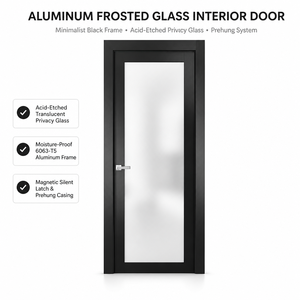
Modern Aluminum Alloy Frosted Glass Interior Waterproof Thermal Insulated Swing Door for Toilet Bathroom
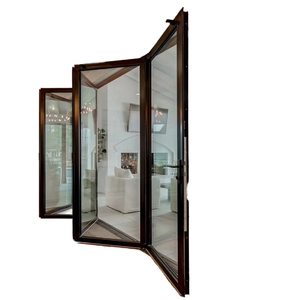
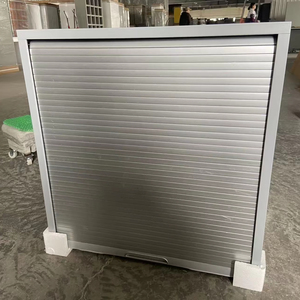
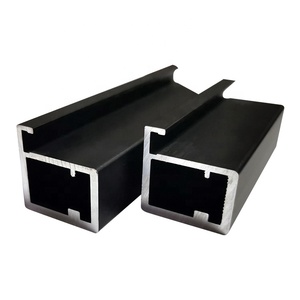
Anodized Brushed Custom Poland Glass Kitchen Cabinet Doors Aluminum Kitchen Profile
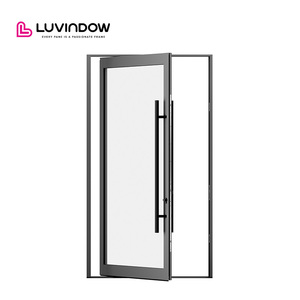
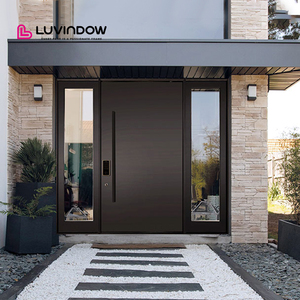
San Francisco Showroom Exterior Storefront Door Modern Aluminum Glass Windproof for Retail Spaces
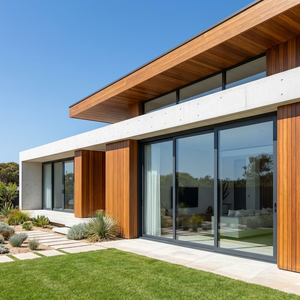
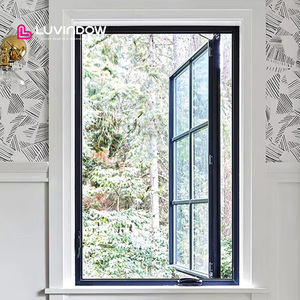
Minimalist Style Easy Operate Crank Casement Window Aluminum Frame for Kitchen Apartment Luxury Villa Installations
Metallurgical Specifications & Structural Architecture of Extruded Aluminium Slat Doors
An authoritative technical analysis of extrusion tolerances, thermal performance, and dynamic deflection thresholds for commercial and high-end residential curtain assemblies.
Alloy Metallurgy & Mechanical Yield
Engineered exclusively utilizing virgin 6063-T5 and structural 6063-T6 alloy billets (compliant with EN 755-2 and ASTM B221). Our architectural slat curtains deliver an ultimate tensile strength exceeding Rm ≥ 215 MPa and a yield strength of Rp0.2 ≥ 170 MPa. This structural configuration prevents slat disengagement during cyclonic positive and negative wind pressures, ensuring long-term micro-deflection resilience under continuous mechanical cycling.
Thermal-Break & Acoustic Core Engineering
To counteract severe heat transfer across climatic zones, our double-skinned hollow slats are precision-injected with high-density polyurethane (PU) foam (48 kg/m³ density) or engineered with co-extruded Polyamide (PA66 GF25) thermal barrier strips. This structural design elevates thermal attenuation to a U-value of ≤ 1.7 W/(m²·K) while absorbing structural vibration to deliver an acoustic sound transmission reduction rating of up to Rw 32 dB.
Advanced Surface Chemistries & Salt-Spray Armor
Surfaces undergo 12-stage pre-treatment, followed by Qualicoat-certified architectural electrostatic powder coating (60–80 μm thickness) or Class I Architectural Anodizing (20–25 μm thickness, ISO 7599). Tested under ASTM B117 Neutral Salt Spray (NSS) for over 3,500 consecutive hours without blister propagation, our slats provide total anti-corrosive protection against severe marine environments, high industrial pollutants, and UV degradation.
Comprehensive Aluminium Slat Door Specification Matrix
Compare mechanical characteristics, dimensional allowances, and certified performance thresholds across our OEM/ODM slat portfolio.
| Profile Classification | Wall Thickness | Standard Slat Height | Wind Pressure Resistance | Thermal Transmittance (U-Value) | Acoustic Rating | Recommended Application |
|---|---|---|---|---|---|---|
| Solid Heavy Extrusion Slat | 2.0 mm – 3.2 mm | 65 mm / 77 mm | AS2047 Class N6 (≥ 4.5 kPa) | 3.4 W/(m²·K) | Rw 26 dB | Coastal Villa Garages, Bank Vaults, Commercial Shorefronts |
| PU Foam-Filled Insulated Slat | 0.8 mm (Double Skin) | 55 mm / 77 mm / 95 mm | Class 4 (EN 12424, 1.8 kPa) | 1.6 – 2.1 W/(m²·K) | Rw 32 dB | Climate-Controlled Logistics Hubs, Cold-Chain Entrances, Luxury Garages |
| Punched / Perforated Micro-Slat | 1.5 mm – 2.2 mm | 50 mm / 75 mm | Class 3 (1.2 kPa) | N/A (Ventilated) | Rw 14 dB | Underground Car Parks, Commercial Retail Malls, Airport Terminals |
| Minimalist Interior Tambour Slat | 1.2 mm – 1.6 mm | 25 mm / 40 mm | Interior Structural | N/A | Rw 22 dB | Cabinetry Enclosures, Hospital Equipment Storage, Modular Office Dividers |
| Aero-Foil Continuous Louver Slat | 1.8 mm – 2.5 mm | 80 mm / 100 mm | Class 5 (2.5 kPa) | Ventilated Shading | Rw 18 dB | Plant Room Louver Doors, High-Rise Transformer Substation Access |
Strategic Sourcing Trends for Architectural Aluminium Slat Systems (2025–2030)
How regulatory shifts toward circularity, zero-carbon building envelopes, and smart IoT connectivity are fundamentally transforming the B2B procurement criteria for major commercial developers and importers.
1. Shift Toward Verified Low-Carbon Recycled Billets
With global green building benchmarks such as LEED v4.1, BREEAM, and the EU Carbon Border Adjustment Mechanism (CBAM) taking legal precedence, international buyers are transitioning away from high-carbon primary smelting profiles. Procurement contracts now demand Environmental Product Declarations (EPD) and Aluminium Stewardship Initiative (ASI) traceability. Tier-1 suppliers must deliver profiles extruded with a certified minimum of 40% to 75% post-consumer recycled scrap, curbing embodied carbon to below 4.0 kg CO2e per kg of aluminium without forfeiting tensile elasticity or crystalline grain density.
2. Integration with Smart BMS and Matter-Over-Thread Automation
Slat door systems are no longer isolated mechanical assemblies; they are vital, active nodes within Building Management Systems (BMS). Procurement trends prioritize tubular and external central motors equipped with native RS-485 Modbus, KNX, or wireless Matter/Zigbee connectivity. This facilitates millisecond-level telemetry monitoring for torque degradation, obstacle recognition, automated fire-curtain descent triggers upon smoke alarm detection (UL10B/EN 1634 compliant), and dynamic temperature-dependent shading adjustments across enterprise smart-city developments.
3. Extreme Weather & Cyclone-Resistant Slat Architecture
Climatic disruptions have led to a revision of structural standards across coastal Asia, the Caribbean, the Gulf region, and Australasia. Standard friction-fit slats are obsolete for exterior applications. Global importers are consolidating vendors around patented end-lock retained slat designs. These interlocking cast-alloy retaining lugs firmly anchor within heavy-duty reinforced dual-guide rails (with wall thickness > 3.0 mm), preventing curtain blowout during positive/negative pressure inversions up to 5,500 Pa (equivalent to Category 5 cyclonic events under AS/NZS 1170.2 and ASTM E330).
4. Prefabricated Modular Cassette Assemblies for Rapid Site Erection
Skyrocketing job-site labor rates in Europe, North America, and Australia have created a decisive shift toward plug-and-play modular tambour and slat door cassettes. B2B buyers now mandate fully pre-assembled, factory-calibrated barrel assemblies containing integrated torsion springs, motorized axles, pre-wired limit switches, and snap-in guide tracks. This innovation cuts job-site installation labor from 8 man-hours per bay to under 90 minutes, simultaneously eliminating common installation errors and costly warranty claims.
Why Global Tier-1 Contractors and Developers Partner with DERCHI
From custom billet extrusion tooling to automated precision fabrication, our Foshan mega-facility integrates 25 years of engineering precision to eliminate supply chain vulnerabilities.
In-House Die Tooling & Rapid Prototyping
Unlike assemblers reliant on generic third-party extrusions, DERCHI maintains a dedicated CNC die-casting and extrusion mold workshop. We design, produce, and validate bespoke slat profiles within 14 business days. Our engineers deliver comprehensive structural CAD shop drawings and native BIM (.RVT / .IFC) families, ensuring exact alignment with architectural fenestration schedules prior to mass billet heating and pressing.
Exhaustive International Quality Accreditations
Every production run undergoes strict metallurgical, dimensional, and functional testing in accordance with ISO 9001 quality management protocols. Our fenestration solutions hold CE certifications, Australian AS2047 cyclone test approvals (Class N6 wind load verification), and UL fire-rating verifications. Project teams receive physical testing documentation, cross-sectional mill certificates, and coating warranty guarantees up to 25 years.
Seaworthy Export Crating & Global Logistics
Maritime transport across high-humidity transits poses extreme oxidation and scratch hazards. DERCHI protects every profile utilizing surface-protective PE film, shock-absorbing cellular EPE foam corners, vacuum dessicant bags, and heavy-duty, fumigated solid-plywood crate enclosures. Shipping FOB or CIF through Nansha, Yantian, and Chiwan directly to major worldwide container hubs guarantees zero-transit deformation.
Frequently Asked Technical Questions (FAQ) for Importers & Engineers
Essential technical, logistical, and commercial inquiries answered directly by our chief fenestration engineers to streamline your procurement cycle.
What specific alloy standards and mechanical properties do you guarantee for OEM/ODM aluminium slat doors?
How do your aluminium slat doors perform in coastal and high-salinity marine environments?
What are the lead times and tooling costs associated with opening custom slat extrusion profiles?
Can you supply complete motorized systems compliant with regional electrical and safety directives?
How do you ensure zero surface damage and dimensional warping during long-distance maritime container shipments?
What is your minimum order quantity (MOQ) and sample policy for prospective contract partners?
Ready to Engineer Your Architectural Slat Door Solution?
Access direct wholesale factory pricing, obtain free CAD shop drawings, or discuss custom extrusion profiles with our senior technical engineers today.
Send an Inquiry