Featured Architectural Aluminum Door Systems
Engineered using 6063-T5/T6 structural alloys, multi-chambered polyamide thermal breaks, and commercial-grade multi-point hardware configurations designed to meet rigorous CE, AS 2047, and UL fenestration standards.
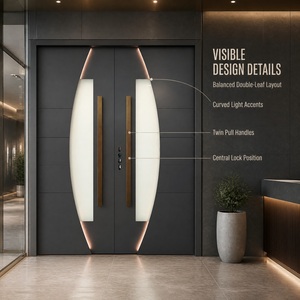
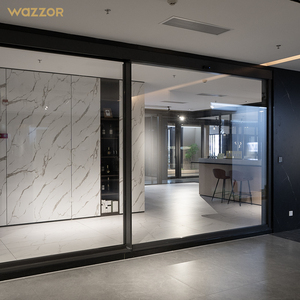
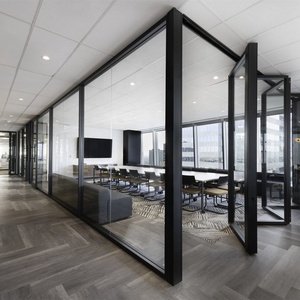
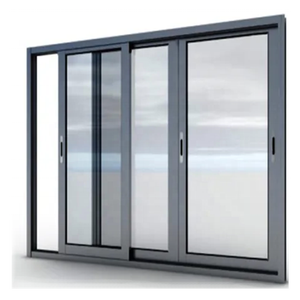
Tier-1 Alloy Metallurgy
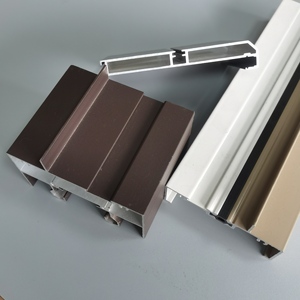
We strictly utilize virgin grade primary aluminum ingots (6063-T5 and 6061-T6), avoiding scrap contamination. This assures uniform structural tensile strength (over 160 MPa), impact resilience, and exceptional anodizing depth exceeding Qualicoat Class 2 criteria.
Bespoke OEM/ODM Capabilities
Equipped with internal CNC 4-axis profile milling centers, automated glass sealing lines, and 3D architectural mockup workshops, DERCHI engineers generate free CAD shop drawings, wind load deflection calculations, and custom extrusion tooling in 14 business days.
Extreme Climate Engineering
Engineered for high thermal differentials and corrosive coastal air, our outdoor entry doors integrate PA66GF25 thermal insulating strips, automotive-grade continuous EPDM dual gaskets, and PPG fluorocarbon finishes resisting 3,000+ hours of continuous salt spray testing.
Turnkey Global Export Packaging
Every fabricated unit undergoes multi-layer protective film lamination, high-density polyethylene edge protectors, moisture desiccant placement, and non-fumigation reinforced OSB plywood crating ensuring defect-free maritime arrival at North American, European, and South Asian deepwater ports.
Global Procurement & Engineering Trajectories in Exterior Fenestration
As commercial developers and custom residential architects face stringent carbon mandates and stricter energy-efficiency codes (such as ASHRAE 90.1, Title 24, and Eurocode EN 14351-1), the global outdoor aluminum door market is undergoing a fundamental structural transition.
Multi-Cavity Polyamide Thermal Break Technology
Conventional solid metal frames suffer from high thermal conductance ($K$-value approx. 160 W/m²·K). Modern procurement schedules require an overall heat transfer coefficient ($U$-factor) below 1.4 W/m²·K. DERCHI incorporates multi-chambered 25mm to 34mm PA66 glass fiber reinforced barrier strips filled with aerogel or high-density polyurethane insulation.
This barrier isolates the exterior envelope from the interior profile, eliminating surface condensation in sub-zero climates while curbing air conditioning thermal loads in excessive heat zones.
Thermal PerformanceOversized Pivot Kinematics & Concealed Hardware
Modern architectural language favors monumentality—doors spanning heights up to 4.5 meters and widths exceeding 2.2 meters, with individual panel weights crossing 500 kg. Standard side-hung butt hinges exhibit mechanical creep and sag over time under such loads.
Our OEM manufacturing lines deploy hydraulic floor pivot bearings with integrated 3D spatial micro-adjustment, multi-speed self-closing valves, and hold-open configurations tested for 500,000+ open-close cycles without operational deviation.
Structural MechanicsSmart Home Biometrics & Mechatronic Multipoint Locks
Passive mechanical lock cylinders are being superseded by mechatronic multipoint locking systems. Overseas contract buyers increasingly demand European-standard multi-point locking (claw hooks and mushroom pins) driven by integrated silent motorized actuators.
DERCHI offers full OEM architectural integration of 3D facial recognition, biometric capacitive fingerprint scanners, encrypted RF transponders, and RS485/Zigbee home automation communication protocols embedded seamlessly inside the thermal aluminum profile.
Smart Building Integration| Evaluation Parameter | DERCHI Heavy-Duty Thermal Break Aluminum | Standard Non-Thermal Extruded Aluminum | Traditional Solid Hardwood Doors |
|---|---|---|---|
| Thermal Transmittance (U-Value) | 1.2 - 1.6 W/(m²·K) (A-Grade Efficiency) | 3.8 - 5.5 W/(m²·K) (Poor, rapid energy loss) | 1.8 - 2.4 W/(m²·K) (Moderate insulation) |
| Monsoon Water Tightness (Pa) | Class 9A (≥ 600 Pa) via Drained Channels | Class 3A (150 Pa) (Prone to joint seepage) | Variable; moisture absorption causes joint swelling |
| Termite & Rot Vulnerability | 100% Termite Proof & Inert to Fungal Rot | 100% Termite Proof | High vulnerability; requires biocide treatments |
| Structural Creep (Tall Panels >3.5m) | Negligible (<1.5mm deflection across 10 years) | Moderate flex under wind pressure | High risk of bow, twist, and seasonal jamb jamming |
| Surface Finish Resilience | PVDF/Fluorocarbon 30-Year Non-Fading | Basic Powder Coat (chalks in 3-5 years) | Polyurethane varnish (cracks every 1-2 years) |
How Professional Buyers Structure Aluminum Door Sourcing
Eliminate miscommunication, engineering mismatches, and transit delays. Our streamlined 5-stage export pipeline ensures seamless handoff from initial CAD review to destination offloading.
Structural Schedule & Wind-Load Assessment
Architects or procurement managers provide rough opening (R.O.) dimensions, local design wind pressure (DP ratings or ASCE 7 velocity requirements), floor clearance parameters, and Vastu/symmetry specifications.
Tooling, Extrusion & 3D Mockup Verification
DERCHI engineering creates millimeter-precise DWG/Revit BIM shop drawings. For proprietary developments, custom extrusion dies are cut and sample corner joints undergo tensile pull tests before mass casting.
Automated Fabrication & Surface Treatment
Alloy billets are extruded, heat-treated to T5/T6 temper, CNC drilled for concealed European hardware channels, and treated via horizontal anodizing lines or vertical Qualicoat-certified electrostatic fluorocarbon towers.
100% Trial Assembly & Sealant Curing
Prior to packaging, every outdoor door is hung in our trial gantry frame to verify hinge tolerance, multipoint lock latching smoothness, perimeter gasket compression, and plumb precision under simulated wind loads.
Maritime Containerization & Port Logistics
Finished doors are packed in reinforced, palletized OSB wooden crates labeled with project room schedules. We handle export documentation, CE declarations of performance, and CIF shipments to Nhava Sheva, Mundra, Karachi, Colombo, Chittagong, Manila, Los Angeles, and Hamburg.
Frequently Asked Technical & Logistics Questions
Authoritative insights straight from our fenestration engineering and overseas freight operations desks.
What are the primary differences between 6063-T5 and 6061-T6 aluminum alloys for exterior doors?
How does your factory ensure water-tightness under heavy tropical monsoons and high wind loads?
Can DERCHI manufacture custom dimensions adhering to local building codes, including ADA and Vastu Shastra requirements?
What surface finish options are recommended for beachfront villas exposed to saline marine atmospheres?
What is the standard production lead time and minimum order quantity (MOQ) for overseas projects?
How do you protect oversized glass and cast aluminum doors against transit damage during long maritime freight?
Request Detailed Technical Specifications & Project Quotes
Connect directly with DERCHI's fenestration structural engineers. Send your architectural schedules, CAD elevations, or custom opening dimensions for prompt technical feedback, thermal simulation reports, and factory-direct pricing within 24 hours.