Precision Fenestration: Factory-Configured Patio Windows
Manufactured from architectural-grade 6063-T6 aluminum alloy extrusions, our patio window and folding glazed assemblies incorporate multi-point locking gearboxes, polyamide thermal breaks, and structural IGUs tailored to commercial and high-end residential specifications.
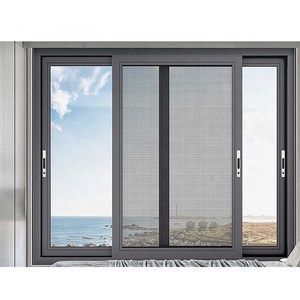
JBD Custom Modern Horizontal Sliding Folding Screen Double Tempered Glass Foshan Aluminum Windows
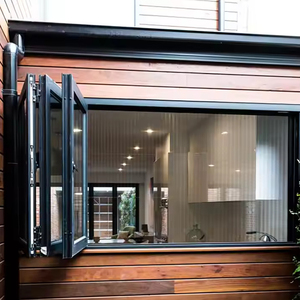
Thermal Break Modern Horizontal Aluminium Windows 2.0mm Multi-Panel Folding for Patio & Villa
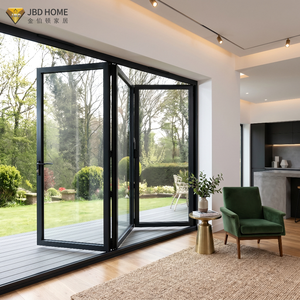
Hurricane Proof Aluminum Exterior Balcony Patio Low-E Soundproof Glass Bifold Folding System
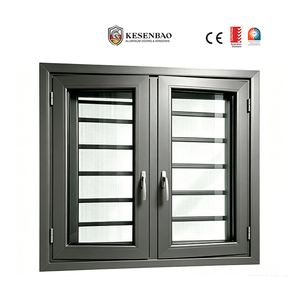
Australian Standard Awning & Inward Opening Aluminum Casement Windows with Security Mesh Grill
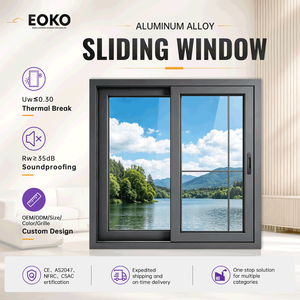
EOKO Commercial Double Glazed Sliding Aluminum Windows for Multi-Family and Mixed-Use Buildings
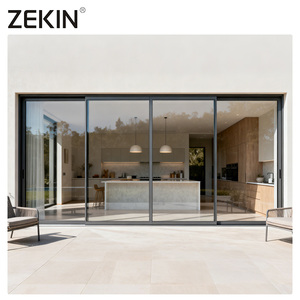
ZEKIN Double Glazed Low-E Acoustic Exterior Standard Black Aluminum Patio Sliding Window-Door
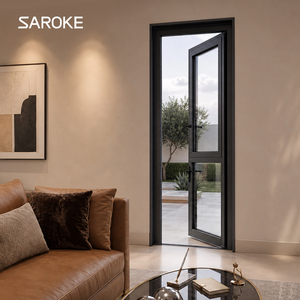
American Architectural Standard Black Thermal Break Aluminum Patio Glazing & Window Enclosures
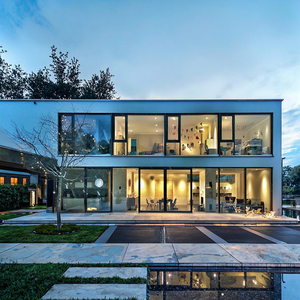
Modern Soundproof Custom Fixed Picture Glass Windows with Ultra-Narrow Architectural Framing
Turnkey OEM/ODM Manufacturing Infrastructure
Headquartered within China's premier industrial fenestration cluster in Foshan, Guangdong, our manufacturing complex integrates smelting, extrusion, anodizing, CNC thermal barrier rolling, and robotic IGU assembly under a unified ISO 9001 quality management architecture.
Precision Tooling & Dies
Over 8,000 active profile dies with in-house custom extrusion capabilities. We compound virgin 6063, 6061, and 6005-T6 aluminum ingots with high mechanical elasticity and precise alloy composition verification via optical emission spectrometers.
CAD, BIM & Statics R&D
Our fenestration engineering wing provides dedicated finite element analysis (FEA), static wind load calculations, thermal envelope simulations (THERM & WINDOW software), and millimeter-exact CAD shop drawings for specifiers worldwide.
Certified Testing Regimes
Third-party validated to Australian AS 2047 (N6 cyclonic pressure rating), European CE EN 14351-1, ISO 9001, and UL fire-rating classifications. In-house test chambers conduct water penetration, air deflection, and cyclic structural endurance tests.
Export Container Packaging
Multi-layered export crating featuring hydrophobic film, high-density polyethylene edge guards, desiccant packs, and steel-banded marine-grade fumigated wooden crates engineered to survive multimodal intercontinental shipping without surface scoring.
Future Procurement Trends Shaping Global B2B Orders
Procurement directors, general contractors, and facade engineers face shifting energy mandates, supply chain realignments, and material standards. Sourcing directly from an OEM/ODM manufacturer requires capitalizing on these emerging dynamics.
Hyper-Thermal Efficiency & Low-E Standardization
Driven by the EU Energy Performance of Buildings Directive (EPBD) and North American IECC 2024 updates, standard double glazing is rapidly being replaced by warm-edge spacer triple-glazed units filled with 90% Argon gas. Developers specify overall window U-values below 1.1 W/(m²·K), demanding deeper polyamide breaks (up to 34mm PA66 GF25) within patio sub-frames.
Direct-to-Factory Tier-1 Strategic Sourcing
Global developers and regional distributors are increasingly bypassing intermediary trading companies to partner directly with primary Foshan extruders and assemblers. Direct factory relationships yield 22–35% direct cost reductions, compress shop-drawing revision cycles from weeks to hours, and grant unfettered visibility into mill test certificates (MTC).
Extreme Climate & Cyclonic Impact Mandates
Coastal and tropical regions—including Florida, the Caribbean, Southeast Asia, and Northern Australia—now strictly enforce impact ratings (ASTM E1886/E1996 Large Missile D and AS/NZS 1170.2). Procurement tenders prioritize heavy-gauge structural sub-sills with integrated pressure-relief valves to stop reverse water infiltration during sustained 3,000Pa gusts.
Pre-Engineered Motorization & Building Automation
The convergence of luxury residential architecture and smart commercial hospitality requires concealed motorization. Inward-opening patio awnings and oversized multi-panel sliding configurations are now ordered pre-wired with 24V DC brushless motors, concealed chain actuators, and KNX/Modbus-ready bus interfaces for synchronized climate automation.
Low-Carbon Recycled Metallurgy (Circular Aluminum)
Scope 3 carbon auditing has become a decisive scoring metric in institutional tenders. Forward-thinking procurement teams require OEM suppliers to furnish extrusions melted via renewable hydroelectric or solar power, containing minimum 40% certified post-consumer recycled scrap, dramatically dropping embodied carbon to below 4.0 kg CO2e per kg aluminum.
Turnkey Pre-Glazed Monobloc Modularization
Escalating on-site installation labor rates in Australia, Europe, and North America are accelerating the shift toward factory pre-glazed, unitized window-wall patio modules. By performing glass placement, structural silicone curing, and hardware torque calibration in a climate-controlled plant, jobsite installation velocity increases by 60%.
Architectural Innovations in Aluminum Patio Systems
The technical boundaries of modern fenestration are defined by the balance between structural deflection thresholds, acoustic isolation, and ultra-minimalist visual profiles.
Ultra-Narrow Sightlines & Structural Glazing
Contemporary architectural aesthetics prioritize borderless transparency. By transitioning structural loads from aluminum frame mullions to structural silicone-bonded laminated glass edges, our newest OEM patio series achieves interlock mullion widths of only 18mm to 24mm while maintaining structural deflection below L/175 under 2,400Pa wind loading.
- Zero-Threshold Infiltration Control: Flush floor details utilize subterranean stainless steel drainage channels with integrated non-return valves, handling water discharge rates up to 180 L/min·m² without interior sill elevation.
- Reinforced Interlock Stiffeners: Internal steel-reinforced structural fins concealed within slender vertical profiles prevent bowing in oversized 3.5m-height patio assemblies.
- Thermal Decoupling Technology: Multi-chamber multi-directional thermal breaks infused with low-density expanded polyolefin (XPS) insulation blocks minimize radiant cavity convection.
Advanced Surface Resiliency & Acoustics
Patio fenestration exposed to marine saltwater mist and intense solar ultraviolet radiation requires surface treatments conforming to AAMA 2605 or Qualicoat Class 3 standards. Our automated horizontal and vertical finishing lines provide electrochemical anodization up to 25 microns and fluorocarbon (PVDF 70/30) resin spray coating.
- 3,000-Hour Salt Spray Resistance: PVDF 3-coat/2-bake finishing protocols resist gloss reduction, color shift (ΔE < 5), and chalking in high-salinity coastal environments.
- Asymmetric Acoustic Attenuation: Utilizing variable glass thickness configurations (e.g., 8mm exterior toughened + 16mm Argon + 6.76mm acoustic PVB laminated interior) to break sound wave resonance, achieving lab-certified STC 44.
- Synthetic EPDM Continuous Vulcanization: Corner-vulcanized EPDM gasket loops eliminate frame miter air leakage, sustaining elasticity from -40°C to +120°C.
| Profile Series | Structural Wall | Thermal Barrier | Glass Configuration | Acoustic (STC) | Design Wind Load | Compliance Standards |
|---|---|---|---|---|---|---|
| Series 55 Casement / Awning | 1.6mm 6063-T6 | 18mm PA66 GF25 | 5mm + 12Ar + 5mm Low-E | 35 dB | 2,000 Pa | CE / AS2047 |
| Series 70 Heavy-Duty Bifold | 2.0mm 6063-T6 | 24mm Multi-Cavity | 6mm + 14Ar + 6mm Low-E | 38 dB | 2,800 Pa | ISO 9001 / CSA |
| Series 85 Hurricane Glazed | 2.2mm 6061-T6 | 30mm Polyolefin Block | 6mm + 12Ar + 6mm + 1.52PVB + 6mm | 42 dB | 4,500 Pa | ASTM E1996 / N6 |
| Series 120 Lift-and-Slide Patio | 2.5mm 6063-T6 | 34mm Reinforced | 8mm + 16Ar + 8mm Triple Glazed | 44 dB | 3,500 Pa | AAMA / NFRC / CE |
Frequently Asked Questions for B2B Importers & Contractors
Authoritative, contract-grade technical answers addressing lead times, code compliance, structural engineering, and customized OEM/ODM fabrication protocols.
What are the minimum order quantities (MOQ) and production lead times for custom OEM/ODM patio window profiles?
For standard architectural catalogue profiles with existing extrusion tooling, our typical MOQ starts at 50 square meters (or approximately 15–20 standard units), with a fabrication cycle of 25–35 calendar days following shop drawing sign-off. For bespoke custom extrusion sections requiring dedicated die cutting, the extrusion tooling fabrication requires 12–15 days, with a sample run of 500kg of test extrusions provided for dimensional CMM inspection prior to bulk production. Container-load volumes (20GP/40HQ) receive prioritized slot scheduling through our automated cutting and CNC corner-crimping cells.
How does your factory ensure compliance with foreign regional building codes like AS 2047, CE, or Florida HVHZ?
Our fenestration engineering department conducts pre-compliance evaluations matching target municipal codes. For the Australian market, profiles and glazed assemblies are produced to satisfy AS 2047 and AS 1288 standards, including air infiltration (≤ 1.0 L/s·m²), water penetration resistance up to 450Pa, and ultimate limit state deflection matching N5/N6 ratings. For North American projects, we calibrate configurations to NFRC thermal standards (U-factor and SHGC verification via Berkeley Lab WINDOW software) and ASTM E1886/E1996 cyclic pressure and missile impact mandates, delivering verified third-party laboratory test reports with every export manifest.
Which glass matrices provide the best balance between Solar Heat Gain (SHGC) and Visible Light Transmittance (VLT)?
For tropical, desert, and high-cooling-load climates (e.g., Middle East, South Asia, Southern US), we recommend a double-glazed configuration featuring an outboard pyrolytic or magnetron-sputtered double-silver Low-E coating on Surface #2 (e.g., 6mm Low-E + 12mm Argon + 6mm Clear Toughened). This yields an exceptional Solar Heat Gain Coefficient (SHGC) between 0.22 and 0.28, while sustaining a generous Visible Light Transmittance (VLT) exceeding 62%. For temperate or cold regions prioritizing passive winter solar heat retention, triple-glazed configurations with Low-E coatings on Surfaces #2 and #5 are engineered to achieve U-values below 0.85 W/(m²·K).
How do you mitigate galvanic corrosion between stainless steel hardware fasteners and aluminum framing profiles?
Direct contact between dissimilar metals possessing disparate electrochemical potentials—specifically austenitic stainless steel (AISI 304/316) screws and 6063-T6 aluminum—induces rapid galvanic corrosion in the presence of an electrolyte. Our factory prevents this failure mode by utilizing Dacromet-coated or zinc-nickel electro-plated 410/316 stainless steel fasteners equipped with vulcanized EPDM or nylon isolating shoulder washers. Furthermore, all internal screw flutes receive neutral, non-acetic structural silicone injections to seal capillary pathways against moisture intrusion.
What quality control checkpoints are enforced during raw extrusion cutting, corner assembly, and glazing?
Our quality assurance program follows strict Six Sigma methodology across five distinct milestones: (1) Extrusion wall thickness and web dimensional tolerance checks using digital micrometers; (2) Dual-component corner crimping tests verifying mechanical shear resistance of corner cleats, reinforced with injected corner-joint adhesives (epoxy resin sealants); (3) Polyamide strip pull-off resistance testing conforming to EN 14024; (4) IGU dew point analysis ensuring the sealed desiccant matrix prevents internal condensation at -40°C; and (5) Complete pre-shipment dry-fitting of sash into master frame to verify hardware locking clearance and multi-point gasket compression.
Can you provide proprietary custom extrusion profiles, and how is tooling amortization managed?
Yes, comprehensive ODM design is a foundational core competency. Our CAD/CAM engineers create proprietary extrusion profiles from architectural sketches, managing thermal break layout, screw spline tolerances, and drainage geometry. Extrusion die costs typically range from $800 to $2,500 depending on profile circumscribing circle diameter and die complexity. Tooling fees are 100% amortized and refunded to the client once procurement volumes reach agreed contract thresholds (generally 20 metric tons of aluminum extrusion per unique section).