Featured Aluminium Glass Windows & Architectural Openings
Engineered from architectural-grade 6063-T5 and 6063-T6 aluminum alloys. Every fenestration profile integrates specialized polyamide thermal breaks, multi-tier weatherstripping, and high-spec structural IGUs manufactured under certified ISO 9001 quality protocols.
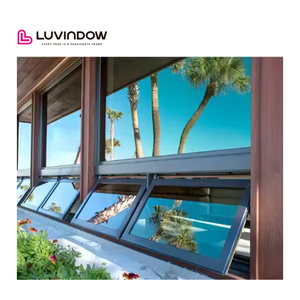
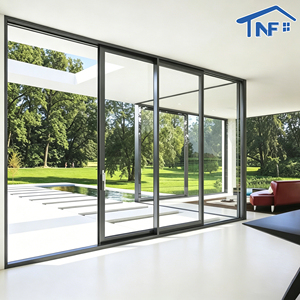
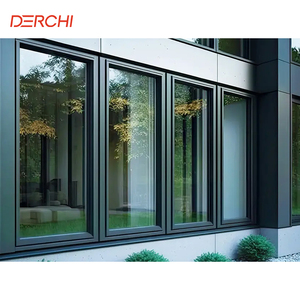
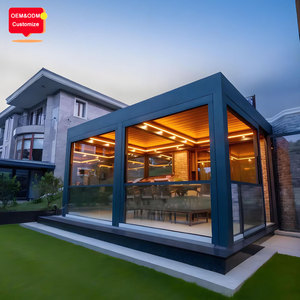
Bioclimatic Louvered Pergola with Integrated Side Glass Windows
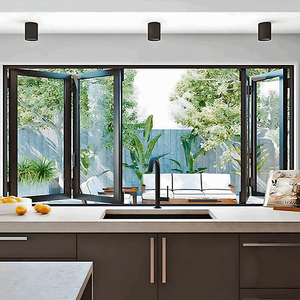
Commercial Accordion Vertical & Horizontal Bifold Window System
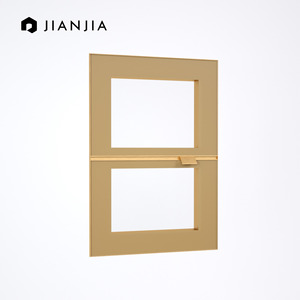
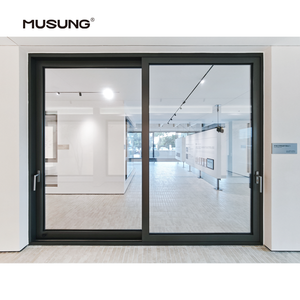
Heavy-Duty Commercial Thermal Break Lift and Slide Glass Door
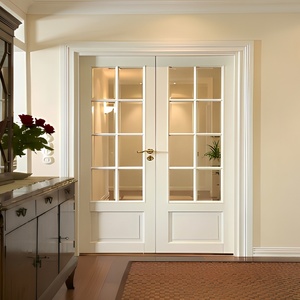
PDP Hurricane Impact Water-Tight Casement French Glazing System
Evaluating the Top 10 Aluminium Glass Window Manufacturers
In-depth technical comparison of tier-one global and regional extrusion system houses versus integrated OEM/ODM fabrication plants across structural engineering standards, thermal performance, and logistics capabilities.
| Manufacturer Classification | Primary Profile Metallurgy | Thermal Barrier Tech | Impact & Structural Rating | Typical Procurement Lead Time | Project Application Tier |
|---|---|---|---|---|---|
| DERCHI (Guangdong Dejiyoupin) | Primary Al billets (6063-T5 / T6) | PA66-GF25 Multi-Chambered | AS 2047 N6, UL Certified, CE, ISO 9001 | 20–35 Days (Factory Direct) | Luxury Villas & Commercial High-Rise |
| Schüco International (Germany) | EN AW-6060 / EN AW-6063 | Engineered Polyamide Insulbars | DIN EN 12210 (Class C5/B5), Passive House | 60–90 Days (Fabricator Assembly) | Ultra-Luxury Residential & Landmark Facades |
| Reynaers Aluminium (Belgium) | Alloy EN AW-6060 T66 | Multi-Cavity Fiberglass Strips | CWCT Class 1, EN 14351-1 Compliant | 60–75 Days (Distribution Network) | Commercial Headquarters & Institutional |
| YKK AP Inc. (Japan/USA) | AAMA 611 Architectural Anodized | ThermaBond Plus & Pour/Debridge | AAMA/WDMA/CSA 101/I.S.2/A440 | 45–60 Days (Regional Hubs) | High-Traffic Commercial & Schools |
| Wicona (Hydro Group / Norway) | Hydro CIRCAL (75% Recycled Al) | XTRusion High-Density Isolators | EN 13830 Hurricane & Seismic Tested | 50–70 Days (Fabrication Chain) | Net-Zero Energy & Sustainable Real Estate |
| Alumil (Greece / SE Europe) | AlMgSi0.5 F22 Extrusions | Multi-Fin PA66 Insulation | IFT Rosenheim Certified, PAS 24 | 40–60 Days (Direct/Regional) | Hospitality Resorts & Coastal Living |
| Kawneer (Arconic / USA) | 6063-T6 Structural Profile | IsoWeb Polyamide Composite | Miami-Dade County NOA Certified | 45–65 Days (Authorized Network) | Institutional, Coastal Hurricane Zones |
| Technal (Hydro Building Systems) | Hydro REDUXA Low-Carbon Alloy | High-Performance Thermal Stuffer | CE & NF fenestration standards | 45–60 Days (Global Dealers) | Urban Residential & Commercial Mixed-Use |
| Western Window Systems (USA) | Heavy-Duty Extruded Alloys | Custom Thermally Broken Profiles | NFRC Rated, AAMA Grade 40-50 | 35–50 Days (Domestic Assembly) | Modern Contemporary Custom Estates |
| Origin Global (UK) | Prime Billet Aluminium 6063 | Polyamide Thermal Interlocks | Secured by Design, BSI Kitemark | 30–45 Days (Direct to Consumer/Pro) | High-End Residential Bi-Folds & Glazing |
Future Procurement & Engineering Trends in Glazing Systems
Real estate developers and structural consultants face evolving strictures in carbon accounting, occupant wellness, and extreme meteorological resilience. Here are the macro architectural shifts transforming window engineering.
Near-Zero U-Values & Aerogel-Infused Breaks
Global building mandates like ASHRAE 90.1, Title 24, and Europe's EPBD demand whole-window U-factors under 1.1 W/(m²·K). Suppliers are eliminating standard single-bar insulation in favor of aerogel cavity blankets, multi-chambered polyamide 66 containing 25% fiberglass, and warm-edge structural foam spacers that prevent perimeter condensation.
Embodied Carbon Accounting & Primary Billets
Procurement contracts increasingly audit Environmental Product Declarations (EPD). Specifiers strictly limit scrap-contaminated secondary aluminium in structural frames due to crystal defect susceptibility. The industry standard now leverages virgin A00 aluminium billets processed via clean-energy smelting to balance structural yield strength with reduced lifecycle carbon.
Direct-From-Manufacturer BIM-to-Fab Integration
The traditional multi-tier distribution model (Extruder → System Distributor → Local Fabricator) adds 35-50% margins and creates coordination errors. Forward-thinking general contractors collaborate directly with vertically integrated mega-manufacturers who ingest Revit/IFC files directly into 5-axis CNC machining centers for zero-tolerance production.
Hyper-Monsoon & Cyclone Engineering
Rapid urban expansion in coastal megacities across South Asia, Australasia, and the Americas requires water penetration resistance exceeding 700 Pa and cyclic wind load capacities reaching 4500 Pa (equivalent to AS 2047 N6). Systems now integrate stepped multi-chamber drainage and pressure equalization chambers to defy capillary leakage.
Acoustic Decoupling in High-Density Corridors
Urban infrastructure projects near elevated transit lines require Sound Transmission Class (STC) ratings over 42 dB. This is achieved using asymmetric insulated laminated glass (e.g., 6mm Low-E + 12Ar + 4mm + 0.76PVB + 4mm) combined with co-extruded automotive-grade EPDM foam gaskets that isolate acoustic flanking transmissions.
Concealed Hardware & Smart Building Integration
Architectural minimalism dictates invisible sashes, 180° concealed hinges, and flush sill transitions. Motorized operators with RS-485 Modbus or KNX protocol compliance are now recessed directly into the thermal cavity, allowing automated ventilation driven by indoor air quality (IAQ) sensors and central BMS systems.
Guangdong Dejiyoupin: Setting Global Standards in Fenestration
Operating a modernized 180,000 m² industrial production base with over 600 skilled technicians, DERCHI is ranked among China's Top 10 High-End Aluminium Door & Window Brands. We manage the entire lifecycle in-house: profile precision extrusion, anodizing, CNC mullion processing, IGU glazing assembly, and rigorous climate simulation testing.

Frequently Asked Questions by Commercial Buyers & Importers
Essential technical, financial, and logistical insights for general contractors, architectural project teams, and import distributors purchasing direct from factory floors.
Architectural grade profiles use primary virgin billets (6063-T5 or 6063-T6) with trace elements of magnesium and silicon precisely controlled according to ASTM B221. Secondary remelted scrap aluminum introduces high iron and zinc contaminants, leading to micro-cracking under cyclone wind pressure, uneven anodizing colors, and early intergranular corrosion in coastal saline air.
Polyamide 66 reinforced with 25% chopped fiberglass has a thermal expansion coefficient (2.3 × 10⁻⁵ K⁻¹) nearly identical to aluminum. This prevents bi-metal warping under extreme temperature differentials (such as 45°C exterior heat vs. 20°C interior air-conditioned spaces), keeping the structural assembly air-tight and mechanically stable over decades.
Effective acoustic decoupling requires breaking sound resonance loops by varying glass thickness. A recommended specification is an asymmetric double-glazed unit with laminated glass, such as 8mm Tempered Low-E + 16mm Argon + (5mm + 0.76mm Acoustic PVB + 5mm Tempered). This configuration disrupts both low-frequency engine hum and high-frequency urban traffic noise.
Finished window and door assemblies are wrapped in 0.1mm electrostatic surface protection film, fitted with custom high-density PE foam corner protectors, vacuum-sealed in moisture barrier plastic, and secured inside solid-ply fumigated A-frame export timber crates. Glass units are separated by cork spacer pads to prevent transit vibration damage over long voyages.
Yes. Our engineering department operates dedicated AutoCAD and Revit design desks. We provide detailed structural wind calculations, glass deflection simulations, anchoring details, interface flashing schematics, and elevation shop drawings to project architects and structural consultants prior to factory fabrication.
We quote both FOB (Foshan, Guangzhou, Shenzhen) and CIF/CFR terms directly to major international terminals including Nhava Sheva (JNPT), Mundra, Chennai, Karachi, Chittagong, Colombo, Sydney, Los Angeles, and Dubai. Every delivery includes bills of lading, verified packing lists, commercial invoices, and third-party test reports for customs processing.
Launch Your Fenestration Project with Engineering Precision
Send us your window schedules, architectural elevations, or structural opening requirements. Our bilingual engineering specialists will return complete take-offs, wind-load evaluations, and direct factory pricing within 24 hours.