Engineered Aluminium Crittall-Style Door Configurations
From slimline industrial acoustic room dividers to thermally isolated exterior French patio systems, explore our factory-tested range configured for architectural luxury and high wind loads.
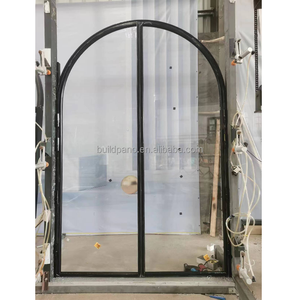
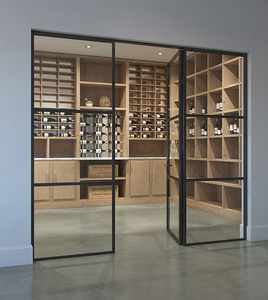
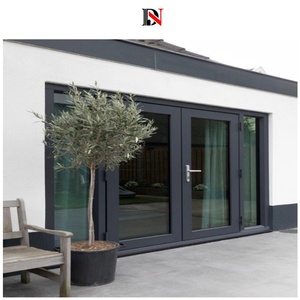
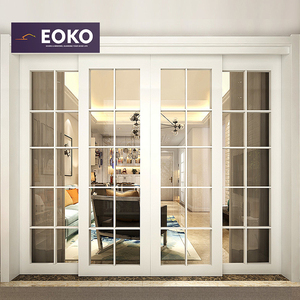
The Structural Evolution: Why Architectural Aluminum Replaces Traditional Steel Crittall
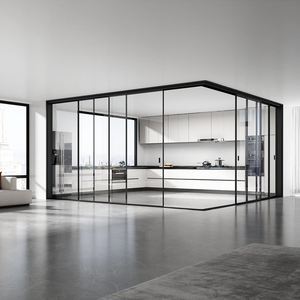
Historically, genuine Crittall steel frames—pioneered in the late 19th century—defined the timeless, industrial aesthetic characterised by slender sightlines, geometric astragal glazing bars, and structural transparency. However, conventional hot-rolled steel introduces critical engineering challenges for contemporary residential and commercial construction: excessive thermal bridging leading to heavy condensation, vulnerability to galvanic corrosion in humid or coastal climates, and immense structural mass that strains hardware and foundation tracks. As a top trusted aluminium Crittall doors supplier, Guangdong Dejiyoupin Doors and Windows Co., Ltd. (DERCHI) re-engineers this historical silhouette using aerospace-grade extruded 6063-T6/T66 aluminium alloy.
Through high-precision CNC multi-chamber extrusion and continuous polyimide (PA66GF25) reinforced thermal breaks, our modern aluminium Crittall door systems achieve a breakthrough U-factor performance down to 1.3 W/m²·K without sacrificing the crisp, ultra-narrow 30mm–45mm sightlines. Unlike standard rolled mild steel which requires recurring anti-oxidation treatments, our aluminium Crittall systems undergo multi-stage chromate-free chemical pretreatment followed by Qualicoat-certified fluorocarbon (PVDF) or architectural powder coating, ensuring complete imperviousness to coastal saline mist, thermal shock, and aggressive UV exposure.
Advanced Thermal Insulation
Integrated with German technoform polyamide thermal breaks and insulated argon gas-filled double/triple glazing units (IGUs) to prevent condensation and optimize HVAC efficiency in extreme climate zones.
Corrosion & Monsoon Resistance
Non-ferrous 6063-T6 alloy combined with multi-point perimeter compression seals and sub-sill drainage manifolds successfully resists typhoon wind pressures tested up to AS 2047 N6 engineering standards.
Acoustic Attenuation (STC 38+)
Multi-layered laminated soundproof glass options paired with co-extruded EPDM cellular weatherstripping eliminate street noise, reverberation, and indoor ambient disturbance in luxury villas and urban apartments.
Specification Benchmark: Thermal Aluminium vs. Traditional Steel Crittall
Objective comparative data to guide structural engineers, LEED consultants, and real estate project specifiers.
| Performance Metrics | DERCHI Thermal Aluminium Crittall | Traditional Hot-Rolled Mild Steel | Standard Non-Thermal Aluminium |
|---|---|---|---|
| Thermal Conductivity (U-Value) | 1.3 – 1.8 W/m²·K (High Performance) | 3.8 – 5.4 W/m²·K (Severe Heat Loss) | 3.0 – 4.2 W/m²·K (Prone to Condensation) |
| Corrosion Resistance Rating | Class 4 Qualicoat (Resists Salt Spray 3000 hrs) | Prone to Oxidation & Rust if Scratched | Standard Anodized (Moderate Durability) |
| Structural Dead Load | Lightweight (2.7 g/cm³) — Minimal Track Wear | Extremely Heavy (7.8 g/cm³) — Requires Structural Rigging | Lightweight (2.7 g/cm³) |
| Air & Water Infiltration | ASTM E283 / E331 Class A Certified | Difficult to Seal; Relies on Surface Putty | Basic Brush Seals (Low Air Tightness) |
| Hardware Integration | Concealed Multi-Point Locks, 3D Heavy-Duty Hinges | Surface-Mounted Welded Latches | Standard Sliding/Mortise Mechanisms |
Future Procurement Trends for Crittall-Style Architectural Glazing
Key shifts shaping high-end international specifications across North America, Europe, Australia, and emerging South Asian markets.
Slimmer Sightlines with Concealed Frames
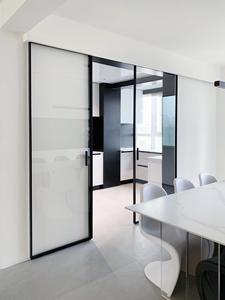
Architects increasingly demand invisible perimeter sub-frames where the visible frame drops below 25mm, maximizing daylight transmission while hiding track hardware in floors and ceilings.
Integrated Smart Access & Bio-Metrics
Commercial and villa project schedules now mandate concealed electromagnetic multi-point locks compatible with KNX smart-home protocols, biometric fingerprint sensors, and motorized automated sliding gear.
Zero-Carbon Life Cycle & Circularity
Green building programs like LEED, BREEAM, and WELL require verified Environmental Product Declarations (EPDs). Recycled structural aluminium extrusions with low embodied energy dominate international tenders.
True Arch & Segmental Curve Manufacturing
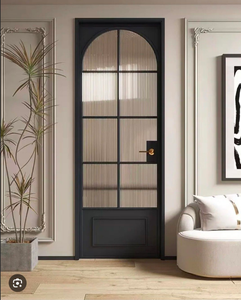
Moving away from pure rectilinear grid partitions, luxury hospitality portfolios specify complex semi-circular curved heads, Gothic arches, and trackless overhead suspension systems fabricated with CNC stretch-bending.
Next-Generation Engineering Innovations at DERCHI
The future of industrial glazing systems relies on deep structural integration rather than mere cosmetic imitation. Guangdong Dejiyoupin's engineering department focuses on three primary R&D vectors: First, mechanically bonded ceramic nano-coatings that achieve extreme pencil-hardness (above 6H) to prevent surface scuffs on high-traffic commercial doors. Second, vacuum-insulated glazing (VIG) integration within ultra-narrow 16mm overall glazing pockets, allowing historical heritage window replications to achieve passive-house thermal standards. Third, modular prefabricated sub-assembly systems that reduce on-site glazing installation time by 65%, shipping fully glazed, factory-torqued panels directly to overseas project sites.
Direct Manufacturing Authority from China's Foremost Fenestration Cluster
Based in Foshan, Guangdong, DERCHI combines vertical industrial integration with rigorous international project execution.
Vertical 180,000 m² Manufacturing
We eliminate trading-company intermediary markups. Our sprawling Foshan production facility features robotic extrusion handling, automated glass laminating lines, and dedicated assembly bays staffed by over 600 skilled technicians.
Free Parametric CAD & BIM Drawings
Our in-house design engineering office provides full shop drawings, static wind load calculations, deflection modeling, and customized mullion grid layouts aligned perfectly with your architectural masterplan before raw material cutting begins.
Comprehensive Global Certifications
DERCHI systems are tested rigorously to international standards including European CE, ISO 9001 quality management, Australian AS 2047 hurricane wind resistance, and North American UL fire ratings, backed by more than 30 proprietary patents.
Secure Overseas Export Logistics
All finished frames and glass units undergo export packaging with anti-scratch protective film, high-density cellular foam corner guards, and solid fumigated plywood crates engineered to endure multi-modal ocean and freight transitions.
Dedicated English Technical Service
From initial takeoff estimation to site installation video conferences, our bilingual fenestration consultants support overseas architects, general contractors, and project developers across global business time zones.
Proven Global Project Delivery
With an active export track record spanning landmark villas, boutique commercial hubs, and luxury hotels across North America, Australia, the Middle East, India, Pakistan, Bangladesh, and Sri Lanka, our structural reliability is field-proven.
Frequently Asked Questions for B2B Importers & Contractors
Detailed technical answers to common queries regarding ordering, customisation, structural engineering, and port delivery.