Architectural Fenestration Whitepaper

Top China Aluminium Folding Doors With Windows Factories & Exporter

Direct Factory Sourcing, Structural Thermal-Break Engineering, and International Export Standards for Commercial & Luxury Residential Envelopes.

Direct Factory Catalog

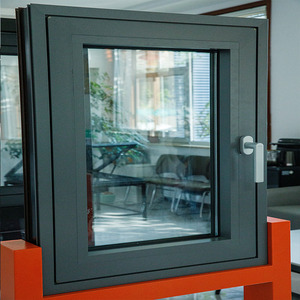
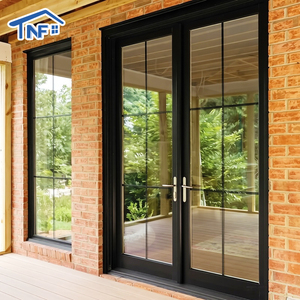
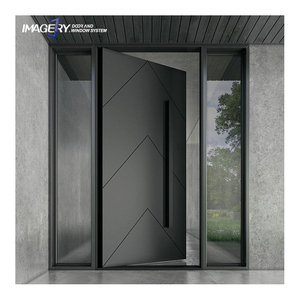
Featured Aluminium Folding Door & Window Systems

Engineered in Foshan, China to satisfy rigorous North American (AAMA/WDMA), European (CE EN 14351-1), and Australian (AS 2047) standards. Compare factory-configured folding, sliding, casement, and pivot systems precision-crafted for architects and volume project developers.

Direct Chinese Manufacturer Authority

Guangdong Dejiyoupin Doors and Windows Co., Ltd. (DERCHI)

Operating directly from the world's renowned aluminium fabrication epicenter in Shishan Town, Nanhai District, Foshan, DERCHI represents tier-one Chinese industrial manufacturing excellence. Serving international general contractors, facade engineers, and volume importers for over 25 years, our intelligent production infrastructure translates architectural concepts into high-precision, structural-grade fenestration assemblies.

Unlike regional assemblers or trading intermediaries, DERCHI controls the complete value chain: in-house 6063-T6 virgin billet extrusion, German-calibrated CNC machining, multi-stage automated fluorocarbon (PVDF) and anodizing surface treatment lines, robotic silicone structural glazing, and full pre-shipment mock-up test assemblies.

25+
Years Experience
180k
m² Production Base
600+
Skilled Specialists
30+
System Patents
CE EN 14351-1
AS 2047 Cyclonic N6
ISO 9001:2015
UL Fire-Rated
DERCHI Foshan Fenestration Manufacturing Campus
DERCHI Digital CNC Machining Center
Engineering Whitepaper

Kinematic Design & Thermal Physics in Modern Folding Fenestration

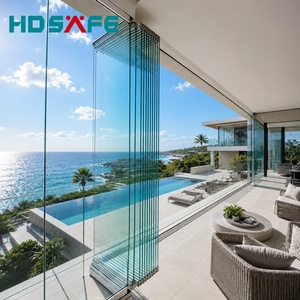
Aluminium folding doors and integrated folding window combinations represent one of the most mechanically demanding architectural envelope systems. Discover how precision thermal isolation, fluid mechanical hardware, and multi-barrier perimeter compression prevent air leakage, water infiltration, and structural sagging.

Isothermal Barrier & PA66 Polyamide Struts

Unbroken aluminium extrusions exhibit high thermal conductivity ($\lambda \approx 160\text{ to }200\text{ W/m}\cdot\text{K}$), causing severe condensation and U-value degradation. DERCHI systems utilize low-conductivity ($0.3\text{ W/m}\cdot\text{K}$) glass-fiber-reinforced PA66 GF25 polyamide thermal barriers mechanically knurled and crimped between interior and exterior aluminium chambers. This engineered break achieves system whole-window $U$-factors as low as $1.1\text{ to }1.4\text{ W/m}^2\cdot\text{K}$ ($\approx 0.20\text{ to }0.25\text{ BTU/h}\cdot\text{ft}^2\cdot^\circ\text{F}$), meeting strict IECC and European Passive House transitional thermal envelope requirements.

Dual-Carriage Bottom-Rolling Kinematics

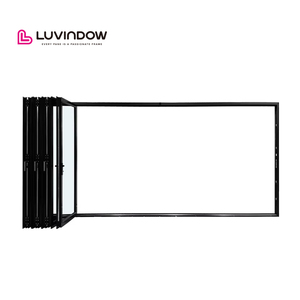
Top-hung folding systems impose tremendous dead-load stresses on the building structural lintel, often leading to ceiling deflection and panel binding over time. Our proprietary architectural bifold configurations employ an inverted bottom-rolling design with stainless steel 316 bogie wheels running along an extruded structural track. Dead loads up to $300\text{ kg per panel}$ are transferred directly to the subfloor slab, while top guide tracks contain quad-bearing nylon rollers to maintain verticality, eliminating frame sagging even across $12\text{-meter}$ expansive spans.

Continuous EPDM Triple-Gasket Pressure Seals

Bifold doors feature extensive vertical hinge junctions that can be susceptible to wind-driven rain penetration under high static pressures. DERCHI integrates continuous vulcanized cellular EPDM gaskets along all panel meeting stiles and interlocking mullions. Coupled with concealed multi-point espagnolette locking shootbolts that compress panels into the frame upon handle engagement, our assemblies achieve exceptional water tightness ratings exceeding $700\text{ Pa}$ (tested under ASTM E331 and AS/NZS 4420.5), completely preventing monsoon moisture intrusion.

Fenestration System Profile Alloy & Wall Depth Thermal Transmittance ($U_w$) Acoustic Attenuation (STC) Max Design Wind Load Primary Application Profile
Thermal Break Accordion Door 6063-T6 / $80\text{mm}$ System Depth $1.2 - 1.5\text{ W/m}^2\cdot\text{K}$ $38 - 42\text{ dB}$ (with laminated IGU) Up to $4,500\text{ Pa}$ (ASTM E330) Luxury Villa Patios, Penthouse Balconies
Heavy-Duty Folding Window 6063-T5 / $65\text{mm}$ System Depth $1.4 - 1.7\text{ W/m}^2\cdot\text{K}$ $36 - 40\text{ dB}$ (Acoustic Interlayer) Up to $3,800\text{ Pa}$ (AS 2047 N5) Commercial Servery Bars, Kitchen Alfresco
Commercial French Casement 6063-T6 / $70\text{mm}$ System Depth $1.3 - 1.6\text{ W/m}^2\cdot\text{K}$ $37 - 41\text{ dB}$ (Argon Infill) Up to $4,200\text{ Pa}$ (EN 12210 C5) Boutique Retail, High-Traffic Entrances
Cyclone-Rated Pivot Door 6060-T6 / $100\text{mm}$ Structural Core $1.5 - 1.9\text{ W/m}^2\cdot\text{K}$ $35 - 39\text{ dB}$ (Heavy PVB SGP) Up to $5,000\text{ Pa}$ (AS 2047 Cyclonic N6) Grand Architectural Entry Portals, Coastal Villas
Strategic Sourcing Analysis

Future Procurement Trends in Aluminium Fenestration (2025–2030)

As global energy codes tighten and architectural designs favor indoor-outdoor continuity, commercial developers and fenestration importers must navigate evolving manufacturing benchmarks and supply chain dynamics.

Trend 01 / Environmental Decarbonization

Low-Carbon Recycled Billets & EPD Verification

International developers operating under LEED v4.1 and BREEAM standards increasingly require third-party Environmental Product Declarations (EPD). Modern Chinese tier-1 factories have shifted significantly toward hydroelectric-smelted aluminium billets and post-industrial scrap scrap recycling (over 40% circular aluminium content). This reduces the embodied carbon of finished bifold extrusions from $18\text{ kg CO}_2\text{e/kg}$ down to $< 4.5\text{ kg CO}_2\text{e/kg}$, safeguarding contractors against carbon border adjustments (EU CBAM).

Trend 02 / Structural Sightlines

Ultra-Narrow Minimalist Stiles & Flush Sills

Visible profile widths have compressed from legacy $120\text{mm}$ bulky frames down to ultra-narrow $45\text{mm}$ to $55\text{mm}$ structural sightlines without sacrificing torsional rigidity. Concurrently, zero-step ADA/DDA compliant recessed sill systems equipped with integrated sub-drainage channels have become the baseline specification for multi-family residential and luxury hospitality projects, eliminating trip hazards while managing heavy sheet run-off.

Trend 03 / Glass Engineering

SentryGlas (SGP) & Triple Low-E Glazing Matrix

Procurement mandates are moving away from monolithic or basic double-tempered glass toward high-performance structural laminated assemblies. Employing ionoplast SentryGlas (SGP) interlayers enables folding panels to withstand extreme hurricane cyclic pressures and missile impacts (ASTM E1886/E1996) while preventing panel collapse even if shattered. Warm-edge spacers (silicone foam or composite stainless steel) combined with soft-coat Low-E argon fills ensure peak solar heat gain control (SHGC $< 0.25$).

Trend 04 / Smart Building Automation

Motorized Accordion Drive & IoT Building Integration

Heavy panels exceeding $200\text{ kg}$ are transitioning from manual actuation to concealed low-voltage brushless DC servo motors. Advanced installations integrate directly with building management systems (BMS) via Modbus, KNX, or Zigbee protocols, featuring anti-pinch optical sensors, wind-speed automatic folding triggers, and remote smartphone control via secure digital gateways.

Trend 05 / Logistics Engineering

Factory Pre-Hung Knock-Down (KD) Supply Chains

High international ocean freight rates and local job-site labor shortages have made shipping complete pre-hung oversized frames economically challenging. Leading Chinese exporters now pre-assemble, calibrate, and drill all hinge locations on 5-axis CNC machines before disassembling them into precision Knock-Down (KD) flat packs with pre-installed gaskets. This cuts container shipping volumes by up to 55% while reducing on-site installation error rates down to near zero.

Procurement Due Diligence

B2B Frequently Asked Questions for Global Importers

Direct answers to the most common engineering, verification, and logistics inquiries submitted by architects, developers, and wholesale door distributors.

How do you prevent panel sagging on folding doors exceeding 6 leaves?

Sagging in wide openings is primarily caused by frame hinge load concentrations and inadequate diagonal bracing. DERCHI solves this by incorporating "toe-and-heel" structural glazing blocks that transfer glass dead load diagonally into the pivot-side hinge stiles. Additionally, our assemblies employ reinforced 6063-T6 corners with heavy cast-aluminium corner cleats injected with two-part polyurethane structural adhesive (corner crimping with epoxy injection), providing permanent structural squareness under heavy dynamic loads.

Which surface finish is recommended for high-salinity coastal environments?

For coastal installations located within $1\text{ to }5\text{ km}$ of sea spray (C4 to C5 corrosive environments), standard architectural powder coating is insufficient. We mandate either 3-coat fluoropolymer PVDF (polyvinylidene fluoride) liquid coatings exceeding AAMA 2605 standards ($>70\%$ Kynar 500 resin) or class 1 hard-anodized coatings ($\ge 25\text{ microns}$). Both systems withstand over $4,000\text{ hours}$ of neutral salt spray testing (ASTM B117) without blistering, pitting, or chalking.

Can folding doors and folding windows be paired with identical profile aesthetics?

Yes. DERCHI engineers custom fenestration suites that utilize harmonized profile extrusion dies across both patio folding doors and kitchen/countertop folding windows. This ensures matching sightline dimensions, identical reveal depths, uniform color tone batches, and congruent architectural hardware (handles, hinge barrels, flush bolts) throughout the entire residential or commercial building envelope.

What documentation is provided to support regional building code compliance?

Every custom export project is accompanied by comprehensive engineering submittal packages: stamped CAD shop drawings with structural anchor details, structural wind load calculation reports ($L/175$ and $L/240$ allowable deflection), glass thermal performance simulation data (NFRC or WINDOW 7.8 reports), and third-party test certificates covering AS 2047, CE EN 14351, or ASTM impact & cyclic pressure test sequences.

How are oversize folding door systems packaged for ocean freight protection?

Products are packed to survive rigorous multi-modal shipping and port transfers. Extrusions are wrapped with electrostatic protective films, cushioned with $20\text{mm}$ high-density EPE foam around corners, encased in heavy vacuum moisture-barrier bags, and secured in non-coniferous fumigated plywood crates reinforced with internal steel perimeter strapping. Desiccant packs are inserted to prevent condensation clouding during equatorial ocean transits.

What is the standard production lead time and minimum order quantity (MOQ)?

Our MOQ is flexible to accommodate bespoke luxury villas and high-volume commercial developments ($1\text{ set}$ for custom prototypes; container-load pricing tiers for wholesale distributors). Standard production lead time is $25\text{ to }35\text{ days}$ following shop drawing sign-off and color swatch approval. Expedited project schedules can be accommodated via dedicated factory cell fabrication.

Connect Directly With Our Foshan Engineering Department

Send your door and window schedule, architectural CAD files, or project tender specifications. Receive factory-direct pricing, structural feasibility reports, and full catalog submittals within 24 business hours.

Get Catalog